Automotive BDC Best Practices: Elevate Your Dealership’s Customer Experience and Sales
Quick question: What’s the secret to mastering sales? Some might say it’s cold calling, others might point to market know-how, but at its core, it’s all about the relationship between the salesperson and the customer. Building trust and guiding that connection to a successful close defines exceptional sales practices.
Take the example of the automotive industry: 95% of vehicle buyers start online, often bypassing dealerships initially. This shift makes a seamless online-to-sales experience essential. Business Development Centers (BDCs) bridge the gap between digital research and in-person interactions. The BDC becomes the linchpin in turning interest into sales by capturing online leads and nurturing them into actionable opportunities.
If you’re an automotive dealer navigating the “digital-to-dealership” gap, this blog will show you how automotive BDC best practices can drive sales and enrich the customer experience. Let’s explore!
What is Automotive BDC?
An Automotive Business Development Center (BDC) is the communication and coordination hub of a dealership. It is responsible for managing inbound and outbound customer interactions, ensuring that every lead is handled quickly, consistently, and with a clear objective. While many people associate the BDC with answering calls or responding to internet inquiries, its role extends far beyond basic communication.
At its core, the BDC exists to connect customer interest with dealership action. When a customer submits a form, makes a call, or engages online, the BDC becomes the first point of contact. That first interaction sets the tone for the entire buying experience. A well-trained BDC does not simply provide information. It guides the conversation, builds trust, and moves the customer toward the next step, typically an appointment.
Modern BDC operations have evolved significantly. Instead of functioning as a support function, the BDC now plays a direct role in driving revenue. It manages multiple communication channels, including phone calls, emails, text messages, and online inquiries, ensuring that no opportunity is missed. Every interaction is tracked, followed up, and structured to increase the likelihood of a showroom visit.
A high-performing BDC typically focuses on several core responsibilities:
- Lead management: Capturing, organizing, and responding to all incoming leads in a timely manner
- Appointment setting: Converting inquiries into scheduled showroom visits
- Follow-up processes: Maintaining consistent communication with prospects who have not yet purchased
- Customer re-engagement: Reaching out to past customers for trade-ins, upgrades, or service opportunities
- Coordination with sales and service teams: Ensuring smooth handoffs and consistent customer experience
The true value of a BDC lies in its ability to bring structure and consistency to customer communication. Without it, leads are often handled inconsistently, follow-ups are missed, and opportunities are lost. With a strong BDC in place, dealerships gain control over their lead flow, improve conversion rates, and create a more predictable path from inquiry to sale.
As customer behavior continues to shift toward digital and phone-based interactions, the BDC has become one of the most critical functions in a dealership. It is no longer optional. It is a central driver of both customer experience and overall dealership performance.
Understanding Modern BDC: Beyond Basics
The traditional BDC model focused on tasks like lead management and appointment scheduling. However, as consumer behaviors evolve, the modern BDC has expanded its scope significantly to align with the digital-first automotive landscape. Today’s BDC is a strategic asset that leverages data, technology, and personalized communication to drive dealership growth.
Modern BDC Key Features:
- Data-Driven Decision-Making: Uses analytics to understand customer behaviors and preferences.
- Omnichannel Communication: Manages customer interactions across email, SMS, social media, and calls.
- Customer Retention Efforts: Proactively engages with past customers for trade-ins, upgrades, or service reminders.
- Service-to-Sales Integration: Converts service visits into sales opportunities.
- Technology Utilization: Implements tools like CRMs, AI-powered chatbots, and call analytics for efficiency.
Expanded Responsibilities of a Modern BDC
- Supporting Pre-Owned Vehicle Acquisitions: Modern BDCs assist in sourcing vehicles, contacting potential sellers, and facilitating trade-ins. This aspect of automotive BDC services helps dealerships maintain a steady inventory of pre-owned vehicles.
- Facilitating Service-to-Sales Transitions: A BDC bridges the gap between the service and sales departments by identifying customers nearing the end of their leases or those who could benefit from an upgrade. This practice aligns closely with automotive service BDC best practices to maximize dealership revenue.
- Driving Customer Retention Efforts: Modern BDCs ensure customers remain loyal to the dealership for both sales and service needs through regular follow-ups, personalized communication, and proactive engagement.
Modern BDC operations are paramount to creating a seamless experience, ensuring no opportunity slips through the cracks. For dealerships seeking support, automotive BDC consulting can provide the expertise needed to refine these efforts.
4 Significant Pillars of an Effective BDC
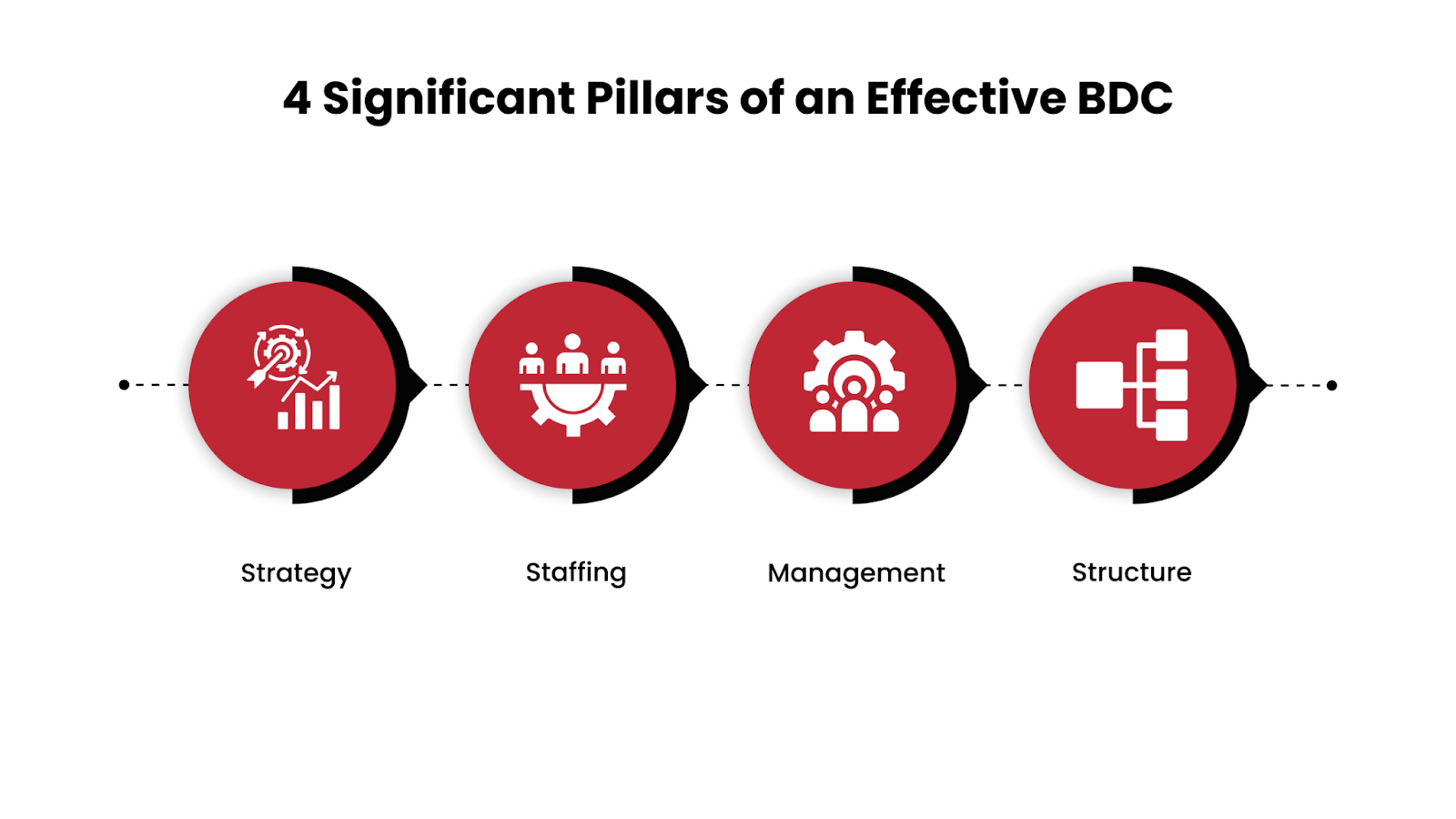
To maximize the impact of a dealership’s business efforts, consider the following foundational pillars drawn from the features of modern BDC.
1. Strategy
An effective strategy is crucial for a BDC’s effectiveness. Data reveals that only 61% of dealerships respond to leads within 15 minutes, while nearly 20% take over an hour, risking the loss of potential leads. Addressing these bottlenecks through proactive strategies can significantly enhance lead conversion rates.
Steps to Develop a Winning BDC Strategy:
- Conduct a Needs Assessment: What are the dealership’s primary goals—more appointments, higher retention, or better service-to-sales conversions?
- Identify Bottlenecks: Are leads falling through the cracks? Are communication channels clear?
- Define Target Metrics: Determine KPIs such as appointment show rates, lead response times, and conversion rates.
Guiding Questions to Refine Strategy:
- What are our customers’ most common pain points?
- How can we leverage our BDC to address these challenges effectively?
- Are our current processes aligned with market demands?
2. Staffing
Staffing practices must adapt to changing consumer expectations. Ensuring your BDC team provides exceptional service and communication can give your dealership a competitive edge.
Key Staffing Practices:
- Hire a Diverse Team: Look for individuals with experience in sales, customer service, and technology. A diverse team ensures well-rounded capabilities.
- Prioritize Continuous Training: Regular automotive BDC training ensures the team stays updated on industry trends, tools, and customer expectations.
- Encourage Collaboration: Build a team that thrives on communication and works well with other departments.
3. Management
Effective management requires consistent monitoring of performance metrics and ongoing refinement of processes. The share of service customers who hung up the phone without being offered an appointment was 9% in 2025, highlighting how often opportunities are lost simply due to missed or incomplete conversations.
Managers can use tools such as call analytics to identify gaps, improve response quality, and coach their teams toward stronger performance. Strengthening these areas helps ensure that every incoming opportunity is handled with structure, consistency, and a clear path toward booking the appointment.
Qualities of an Effective BDC Manager:
- Sets clear and measurable goals for the team.
- Motivates staff through regular recognition and feedback.
- Tracks performance metrics and identifies areas for improvement.
- Conducts regular performance reviews to encourage growth.
4. Structure
With CRM integration and predictive modeling, BDCs can anticipate customer needs and streamline operations. For instance, phone calls convert better than web leads, underscoring the importance of prioritizing phone interactions.
Best Practices for Structuring a BDC:
- Establish Clear Communication Channels: Ensure smooth lead handoffs between the BDC, sales, and service teams.
- Integrate with CRM/DMS Systems: Provide a unified customer view, enabling personalized interactions.
- Define Roles and Protocols: Avoid duplication of efforts by clearly outlining responsibilities for BDC agents.
Now that we’ve covered the essentials and explored strategies to elevate your BDC efforts, it’s time to focus on the next step: leveraging the data gathered through these practices to supercharge your sales.
A well-structured BDC isn’t just about generating leads and scheduling appointments—it’s a goldmine of customer insights. From understanding buyer preferences to identifying trends, the data collected can help dealerships refine their approach, personalize customer interactions, and ultimately close more deals.
Let’s dive into how you can transform this information into actionable steps to boost your sales performance.
Utilizing Data and Technology: Turning Insights into Action
Data and technology are transforming how BDCs operate, offering insights that allow dealerships to make informed decisions and provide tailored experiences.
Leveraging Data-Driven Insights
- Understand Customer Behavior: By analyzing customer data, dealerships can identify trends and preferences, such as popular vehicle models or preferred communication channels. This allows the BDC to anticipate customer needs and respond proactively with tailored recommendations or offers.
- Predictive Modeling: Advanced analytics tools enable BDCs to forecast potential buyers based on behavioral patterns, such as online activity or previous interactions. This data can guide proactive outreach campaigns, targeting high-potential customers at the right time to maximize conversion opportunities.
- Personalized Communication: Data allows BDCs to craft marketing messages and service reminders that resonate with individual customers. For example, a buyer researching electric vehicles might receive targeted information on eco-friendly models, incentives, or upcoming test drives, creating a more relevant and engaging experience.
Essential Technology Tools
- CRM Systems: Customer Relationship Management (CRM) systems are the backbone of BDC operations. They centralize lead tracking, interaction history, and customer details, enabling seamless communication and follow-ups. CRMs also provide insights into customer lifecycle stages, helping the BDC prioritize outreach efforts.
- Analytics Platforms: Analytics platforms monitor performance metrics such as lead conversion rates, appointment show rates, and campaign ROI. These insights help BDC managers identify areas for improvement and optimize strategies to achieve better results.
- Communication Tools: Modern communication tools like SMS, email automation, and AI-powered chatbots enhance customer engagement by ensuring timely and efficient communication. For instance:
- SMS: Ideal for quick appointment confirmations or reminders.
- Email Automation: Useful for nurturing leads through personalized campaigns.
- AI Chatbots: Respond instantly to common queries, ensuring customers feel valued even during off-hours.
By integrating these tools into their workflows, BDCs can transform raw data into actionable insights that enhance customer satisfaction and drive a dealership’s overall success. However, having access to all this data is just the beginning—knowing how to use it effectively to attract potential customers is where the real magic happens. Moreover, if you’re wondering how to turn data into measurable results, you’ll find it in the upcoming section.
3 Easy Tips to Convert Data into Sales: Additional Best Practices for Automotive BDC
Prioritize Customer Experience
Building trust and fostering strong relationships is critical in today’s customer-centric environment. A focus on customer experience ensures long-term loyalty and repeat business.
Tips to Enhance Customer Experience:
- Understand customer pain points and provide solutions.
- Train BDC agents to focus on providing value rather than simply closing sales.
- Follow up with customers post-sale or service to ensure satisfaction.
Embrace Digital Retailing
With buyers spending most of their research time on mobile devices, dealerships must optimize their digital presence. Offering online scheduling and virtual test drives can enhance convenience and engagement. In essence, the car-buying process has increasingly shifted online, and dealerships must adapt to meet customers where they are.
Digital Retailing Strategies:
- Offer online appointment scheduling for convenience.
- Provide virtual test drive options to engage customers remotely.
- Utilize digital tools to streamline the buying process, such as financing applications and price estimates.
Measure and Track Performance
Continuous improvement requires a clear understanding of the BDC’s performance. Tracking metrics allows dealerships to identify strengths and address weaknesses effectively.
Key Performance Indicators (KPIs) for BDC Success:
- Lead conversion rates.
- Appointment show rates.
- Customer satisfaction scores.
Use the above data to refine strategies, train staff, and improve performance.
The role of BDC training in today’s automotive landscape cannot be overstated. By adopting automotive BDC best practices, dealerships can transform customer interactions, enhance operational efficiency, and drive more sales.
Key takeaways include:
- Developing a tailored strategy that aligns with dealership goals.
- Hiring, training, and managing a team equipped to meet modern challenges.
- Leveraging data and technology to personalize experiences and improve outcomes.
- Embracing digital retailing and prioritizing the customer experience.
By implementing these automotive BDC best practices, your dealership can transform customer interactions, enhance operational efficiency, and drive more sales. Whether you need automotive BDC consulting or car dealership BDC training, partnering with experts can help ensure sustained success in today’s competitive market.
Furthermore, consider partnering with automotive BDC consulting and training experts to improve your dealership’s BDC. We at ATN can provide comprehensive solutions to optimize dealership BDC operations, ensuring sustained success in a competitive market.
Drive-In Sales with Best Automotive BDC Training by ATN
Mastering automotive BDC best practices is essential for dealerships looking to enhance their sales performance and operational efficiency. While a skilled sales team can handle the basics, structured, ongoing training can help elevate their effectiveness to a whole new level. This is where the Automotive Training Network steps in, offering expertise to help your dealership achieve measurable success.
A knowledgeable and well-trained Business Development Center (BDC) team is paramount for modern dealerships. With over 40 years of experience in the industry, we offer a comprehensive range of BDC training programs devised to meet your dealership’s unique challenges and goals. These include:
- Virtual Training: Convenient and flexible learning options tailored to your team’s schedule.
- Customized In-Dealership Programs: On-site training developed specifically for your dealership’s processes and objectives.
- Intensive BDC Boot Camps: Focused, hands-on sessions to effectively refine skills and integrate the latest BDC strategies.
Discover how ATN’s professional training solutions can transform your team and drive your dealership’s success. Contact us today!
Frequently Asked Questions
1. What is a good appointment set rate for a dealership BDC?
A strong BDC typically aims for an appointment set rate between 50% and 70% of contacted leads. The exact benchmark can vary based on lead quality and follow-up consistency.
2. How quickly should a BDC respond to new leads?
BDC teams should respond within minutes whenever possible. Faster response times significantly increase the chances of connecting with the customer and securing an appointment.
3. What is the difference between a BDC and a sales team in a dealership?
The BDC focuses on handling leads, setting appointments, and managing communication, while the sales team handles in-person interactions and closes deals.
4. How can dealerships reduce BDC appointment no-shows?
Clear appointment confirmations, reminder calls or texts, and setting expectations during the initial conversation can significantly improve show rates.
5. What metrics should a dealership track to measure BDC performance?
Important metrics include lead response time, contact rate, appointment set rate, appointment show rate, and conversion rate to sales.