How Can Dealerships Improve Service Department Profitability and Drive Consistent Revenue?
Service departments have long been the most consistent and profitable part of a dealership, yet many still operate below their full potential. Recent industry data shows that fixed operations remain a major profit driver, with average dealership service and parts gross profit reaching $4.91 million in 2025. That level of performance highlights that service is one of the most powerful drivers of dealership profitability.
Despite this, many service departments struggle with underperformance. Missed scheduling opportunities, inconsistent communication from service advisors, and a lack of structured processes often result in lost revenue that could have been captured through better execution.
Customers may visit once and never return, recommended services go unaddressed, and teams operate without clear accountability. These gaps add up quickly, limiting revenue growth and customer retention.
Improving service department profitability requires a structured approach that focuses on measurable performance, consistent processes, and ongoing team development.
Why Is Service Department Profitability Important for Dealerships?
In an environment where vehicle sales can fluctuate due to inventory constraints, pricing pressure, and shifting buyer behavior, service operations are crucial to dealership performance.
- Stable revenue stream: Service operations generate consistent income, unlike vehicle sales that vary due to inventory, pricing pressure, and buyer behavior.
- Stronger margin structure: Labor and parts typically deliver higher margins than new-vehicle sales.
- Reduced reliance on unit sales: A well-run service department supports steady gross profit without depending solely on vehicle volume.
- Support during slow periods: Fixed operations help offset declines in showroom activity and maintain financial stability.
- Customer retention driver: Every service visit builds trust and strengthens long-term relationships.
- Future sales impact: Customers who service regularly are more likely to return for their next vehicle purchase.
- Risk of lost opportunities: Weak service experiences reduce retention and limit future revenue potential.
When these elements are managed effectively, the service department becomes a reliable engine for both profitability and long-term dealership growth.
Common Reasons Service Departments Underperform
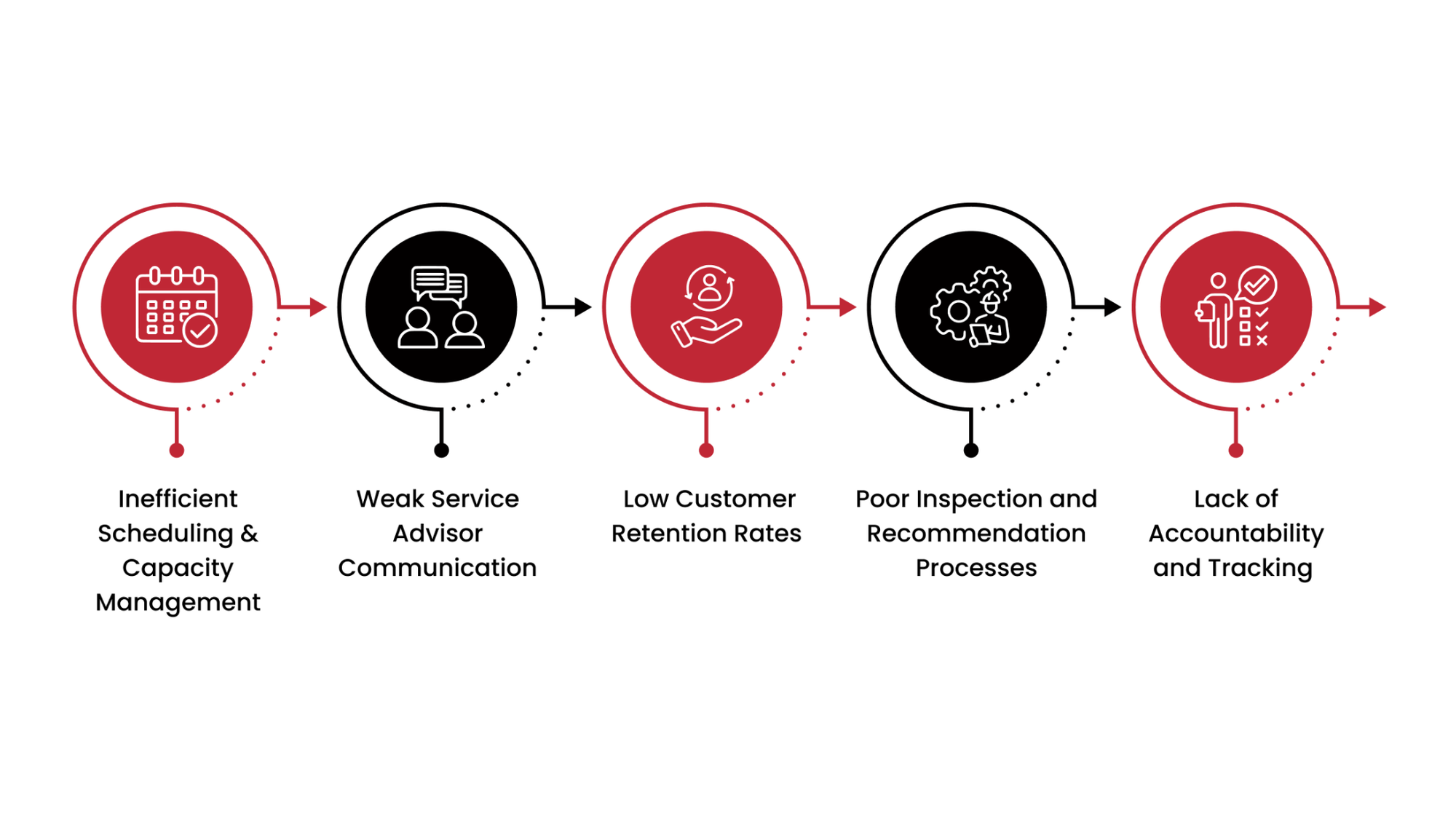
Many service departments do not struggle due to a lack of demand, but due to gaps in execution. Small inefficiencies across scheduling, communication, and process discipline can compound over time, leading to missed revenue and inconsistent performance. Identifying these issues is the first step toward improving profitability.
Inefficient Scheduling and Capacity Management
Poor scheduling often creates bottlenecks that limit how many vehicles a service department can handle effectively. When time slots are not aligned with technician capacity, opportunities are either missed or mishandled.
Common issues include:
- Poor time allocation: Appointments are not distributed based on job type or technician availability, leading to delays.
- Overbooking: Too many vehicles scheduled at once creates longer wait times and reduced customer satisfaction.
- Underutilization: Open time slots go unfilled, leaving available labor hours unused.
Balancing scheduling with actual shop capacity ensures that every available hour contributes to revenue.
Weak Service Advisor Communication
Service advisors play a direct role in revenue generation, yet many lack structured communication techniques. When conversations are unclear or inconsistent, customers may decline recommended services or leave without fully understanding their options. Major challenges include:
- Limited upsell conversations: Advisors fail to present additional services with confidence or clarity.
- Lack of explanation: Customers do not fully understand why a service is needed or how it benefits them.
- Inconsistent messaging: Different advisors communicate differently, creating confusion and reducing trust.
Strong communication builds confidence and increases acceptance of recommended work.
Low Customer Retention Rates
Service profitability depends heavily on repeat business. When customers visit once and do not return, the dealership loses long-term revenue opportunities.
Contributing factors include:
- Lack of follow-up: Customers are not reminded about future maintenance or service needs.
- Transactional interactions: Service visits feel like one-time transactions rather than ongoing relationships.
- Inconsistent experience: Variability in service quality discourages repeat visits.
Retention strategies help convert one-time visits into ongoing customer relationships.
Poor Inspection and Recommendation Processes
Multi-point inspections are a major source of additional service revenue, but only when executed consistently and communicated effectively. Gaps in this process often result in missed opportunities.
Common issues include:
- Incomplete inspections: Technicians may overlook or skip potential service opportunities.
- Unclear recommendations: Advisors fail to present findings in a way customers understand.
- Lack of prioritization: Customers are not guided on which services are urgent versus optional.
A structured inspection process ensures that every vehicle visit generates maximum value.
Lack of Accountability and Tracking
Without clear metrics and accountability, service departments struggle to identify where performance is falling short. Inconsistent tracking leads to inconsistent results.
Typical challenges include:
- Limited visibility: Managers lack clear insight into key performance indicators.
- Inconsistent processes: Teams operate without standardized workflows.
- No performance benchmarks: Advisors and technicians lack measurable goals.
Consistently tracking performance allows dealerships to identify gaps, measure improvement, and maintain accountability across the team.
Primary Metrics That Drive Service Department Profitability
Improving service department performance starts with measuring what matters. Without clear visibility into the right metrics, it becomes difficult to identify gaps, track progress, or hold teams accountable. Focusing on a core set of performance indicators allows dealership leaders to make informed decisions that directly impact revenue and efficiency.
The most important service department metrics to track include:
- Effective labor rate: Measures the average revenue generated per billed labor hour, helping identify pricing effectiveness and overall profitability.
- Hours per repair order (HPRO): Indicates how much work is performed on each vehicle visit, reflecting the success of inspections and advisor recommendations.
- Repair order (RO) count: Tracks the total number of vehicles serviced, providing insight into traffic volume and overall demand.
- Technician productivity and efficiency: Measures how effectively technicians convert available time into billable hours, highlighting utilization and performance.
- Customer pay vs warranty mix: Evaluates the proportion of higher-margin customer-paid work compared to lower-margin warranty work.
- Appointment show rate: Reflects the percentage of scheduled customers who actually arrive, indicating the effectiveness of scheduling and confirmation processes.
- Declined services rate: Identifies how often recommended services are not accepted, revealing missed revenue opportunities and communication gaps.
Consistently monitoring these metrics provides a clear picture of service department performance and highlights where improvements can drive increased revenue.
Top 6 Strategies to Increase Service Department Revenue at Your Dealership
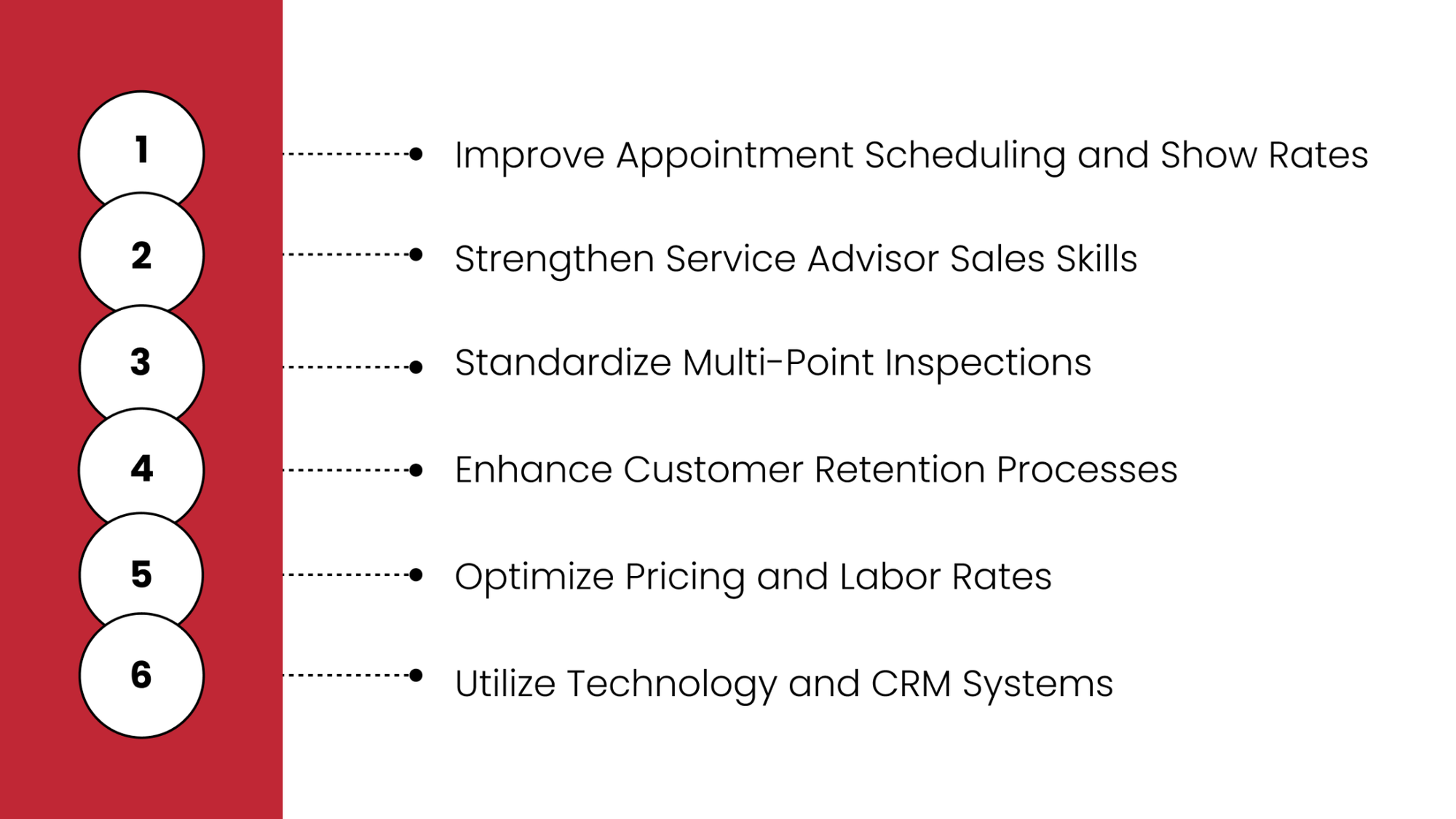
Improving service department profitability requires a combination of operational discipline, strong communication, and consistent execution. Dealerships that focus on both efficiency and customer experience are better positioned to capture every available revenue opportunity. The following strategies provide practical ways to increase service department revenue dealership-wide while improving overall performance.
Improve Appointment Scheduling and Show Rates
Scheduling is the foundation of service department productivity. When appointments are managed effectively, technicians stay productive, and customers experience shorter wait times. Poor scheduling, on the other hand, leads to missed opportunities and underutilized capacity.
Major improvements include:
- Confirmations and reminders: Proactively contacting customers through calls, texts, or emails increases appointment show rates and reduces last-minute cancellations.
- Better time slot management: Aligning appointment types with technician availability ensures the right work is scheduled at the right time.
A structured scheduling process helps maximize available labor hours and maintain a steady flow of service work.
Strengthen Service Advisor Sales Skills
Service advisors are one of the most important drivers of service revenue. Their ability to communicate clearly and build trust directly impacts how many recommended services are approved.
Areas to focus on include:
- Clear communication: Explaining service needs in simple, customer-friendly terms helps build confidence.
- Trust-based conversations: Advisors who focus on helping rather than selling create stronger relationships.
- Presenting recommendations effectively: Structuring conversations so customers understand both urgency and value increases acceptance rates.
When advisors are trained to guide conversations effectively, customers are more likely to approve additional work.
Standardize Multi-Point Inspections
Every service visit presents an opportunity to identify additional maintenance or repair needs. However, without a consistent inspection process, these opportunities are often missed.
Best practices include:
- Consistent inspections for every vehicle: Ensuring that every car goes through the same structured evaluation process.
- Clear documentation: Providing detailed findings that advisors can communicate confidently.
- Increased service opportunities: Identifying maintenance needs that may not have been originally requested.
Standardized inspections help ensure that no opportunity is overlooked and that recommendations are based on a repeatable process.
Enhance Customer Retention Processes
Retaining service customers is one of the most effective ways to increase long-term revenue. A single visit has limited value compared to a customer who returns regularly for maintenance and repairs.
Effective retention strategies include:
- Follow-up systems: Contacting customers after service visits to reinforce satisfaction and address any concerns.
- Maintenance reminders: Sending timely reminders for upcoming services such as oil changes, tire rotations, or inspections.
- Personalized communication: Using customer history to tailor recommendations and make interactions more relevant.
- Service history reviews: Proactively identifying upcoming needs based on past visits and vehicle mileage.
- Loyalty incentives: Offering service packages or rewards that encourage repeat visits.
Strong retention processes turn one-time visits into ongoing relationships, driving consistent revenue.
Optimize Pricing and Labor Rates
Pricing plays a significant role in service profitability. Many dealerships either underprice their services or fail to regularly review labor rates, leaving potential revenue unrealized.
Primary considerations include:
- Regular pricing reviews: Evaluating labor rates and parts pricing to ensure they reflect current market conditions.
- Balancing competitiveness and profitability: Setting rates that remain attractive to customers while supporting strong margins.
An effective pricing strategy ensures that the service department captures appropriate value for the work performed.
Utilize Technology and CRM Systems
Technology can significantly improve efficiency and consistency within the service department. When used correctly, CRM systems and service software help teams manage customer relationships and streamline operations.
Major benefits include:
- Tracking customer history: Access to past service records allows advisors to provide more personalized recommendations.
- Automating reminders and communication: Systems can handle appointment confirmations, follow-ups, and maintenance reminders without manual effort.
Using technology reduces administrative workload and ensures that no customer opportunity is missed, supporting both efficiency and revenue growth.
How Does Training Assist in Improving Service Department Performance?
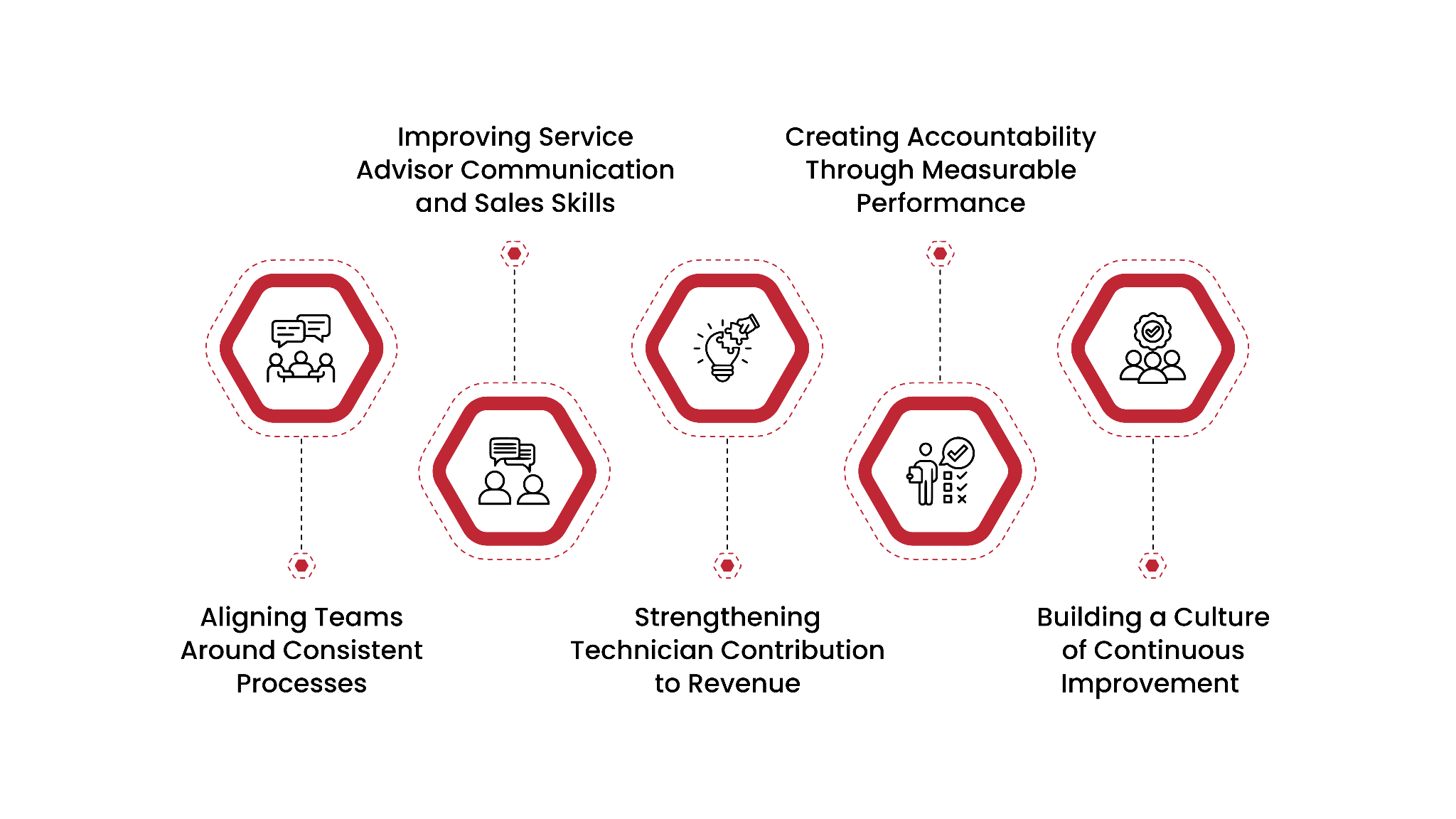
Sustainable improvements in service department profitability do not happen through process changes alone. Training plays a critical role in ensuring that every member of the team understands how to execute consistently, communicate effectively, and contribute to overall performance. Without structured training, even well-designed processes break down over time.
Aligning Teams Around Consistent Processes
Training ensures that every member of the service department follows a consistent, repeatable approach to daily operations. Without alignment, processes vary across advisors and technicians, leading to inconsistent customer experiences and missed revenue opportunities.
When teams are trained together, expectations become clear. Inspections are completed the same way every time, recommendations are documented properly, and customer interactions follow a structured flow. This consistency improves both efficiency and customer trust.
Improving Service Advisor Communication and Sales Skills
Service advisors have a direct impact on revenue, and training plays a major role in developing their ability to communicate effectively. Advisors who receive regular customized dealership training are better equipped to explain services, handle questions, and guide customers toward informed decisions.
Training helps advisors:
- Communicate service needs in clear, simple language
- Build trust through confident and transparent conversations
- Present recommendations in a way that increases approval rates
Stronger communication leads to higher acceptance of recommended work and improved revenue per repair order.
Strengthening Technician Contribution to Revenue
Technicians are often the first to identify additional service opportunities, making their role critical in driving revenue. Training reinforces the importance of thorough inspections and accurate reporting.
With proper training, technicians:
- Perform consistent multi-point inspections
- Identify potential maintenance or repair needs
- Document findings clearly for service advisors
This creates a stronger connection between inspection results and customer-facing recommendations, ensuring fewer missed opportunities.
Creating Accountability Through Measurable Performance
Training introduces structure and accountability by connecting daily actions to measurable outcomes. When teams understand how their performance is tracked, they are more likely to take ownership of results.
Regular in-dealership training supports accountability by:
- Reinforcing the importance of key performance metrics
- Establishing clear expectations for each role
- Providing a framework for consistent execution
Managers gain better visibility into performance and can coach more effectively using real data.
Building a Culture of Continuous Improvement
Ongoing training creates a mindset of continuous development rather than reactive problem-solving. Instead of addressing issues after they occur, teams become proactive in improving processes and performance.
Regular training helps teams:
- Stay aligned with best practices
- Adapt to changing customer expectations
- Maintain consistency across all service interactions
Over time, this culture leads to higher efficiency, stronger customer relationships, and sustained growth in service department profitability.
Turn Your Service Department Into a Consistent Profit Center With Automotive Training Network
Improving service department profitability requires more than process changes. It requires consistent execution, strong leadership, and a team that understands how to deliver value at every customer interaction. Automotive Training Network helps dealerships achieve this through structured fixed operations training built around real-world dealership performance.
ATN’s Black Ops service and parts training focuses on practical improvements that directly impact revenue, efficiency, and customer retention. Rather than applying generic strategies, the program is tailored to each dealership’s operations, ensuring that every change is relevant and measurable.
Dealerships working with Automotive Training Network benefit from:
- Black Ops fixed operations expertise: Proven strategies developed through years of refining dealership service and parts performance
- Customized operational improvements: Training aligned with your dealership’s specific challenges and opportunities
- Stronger customer experience: Processes that create smoother interactions and long-term retention
- Improved shop productivity: Better workflow, time management, and technician utilization
- Financial performance focus: Clear visibility into metrics that drive profitability
Service departments that commit to structured training consistently outperform those that rely on ad hoc improvements. With the right approach, every repair order becomes an opportunity to increase revenue, strengthen customer relationships, and build long-term dealership success.
If you are ready to increase service department revenue across your dealership, explore ATN’s service and parts training programs.
Frequently Asked Questions
1. How can dealerships increase service lane traffic without increasing marketing spend?
Dealerships can increase service traffic by improving internal processes, such as appointment follow-ups, declined-service recovery, and reactivating inactive customers through targeted outreach. Utilizing existing customer data is often more effective than acquiring new leads.
2. What is the impact of express service on profitability?
Express service can significantly improve throughput and customer satisfaction. Faster turnaround times allow dealerships to service more vehicles per day while appealing to customers who prioritize convenience, leading to increased volume and retention.
3. How do declined services affect long-term revenue?
Declined services represent immediate lost revenue and future risk. If not followed up on, those opportunities are often lost to independent shops. Tracking and re-engaging declined services can recover a meaningful portion of missed revenue.
4. How important is service advisor-to-technician communication?
Strong communication between advisors and technicians ensures that inspection results are clearly understood and presented accurately to customers. Poor internal communication often leads to missed recommendations and lower approval rates.
5. Can improving service operations impact vehicle sales?
Yes. A positive service experience builds trust and keeps customers connected to the dealership. Customers who regularly service their vehicles at a dealership are more likely to return for their next vehicle purchase.