Why Is Continuous Training Significant for Sustained Growth in Automotive Dealerships?

Most dealerships invest heavily in marketing and technology. But training often happens in bursts. New hires get onboarded. Teams attend a workshop. Energy rises for a short time, then daily pressure takes over, and habits slip back because development stops once training ends.
Research across industries clearly shows the risk. Studies on workplace learning consistently find that employees forget up to 70% of what they learn within a day without reinforcement. Skills fade even faster when learning never gets applied under actual conditions. That pattern plays out in dealerships every day, in lead handling, follow-up, CRM use, and customer conversations.
Sustained growth does not come from isolated training events. It comes from continuous learning that strengthens skills, adjusts behavior, and evolves with changing conditions. Dealerships that treat training as part of daily operations protect performance during busy periods and build teams that improve year after year.
That difference determines whether growth holds or quietly slips away. Continuous training keeps execution sharp long after the initial session ends.
Importance of Continuous Training for Dealerships
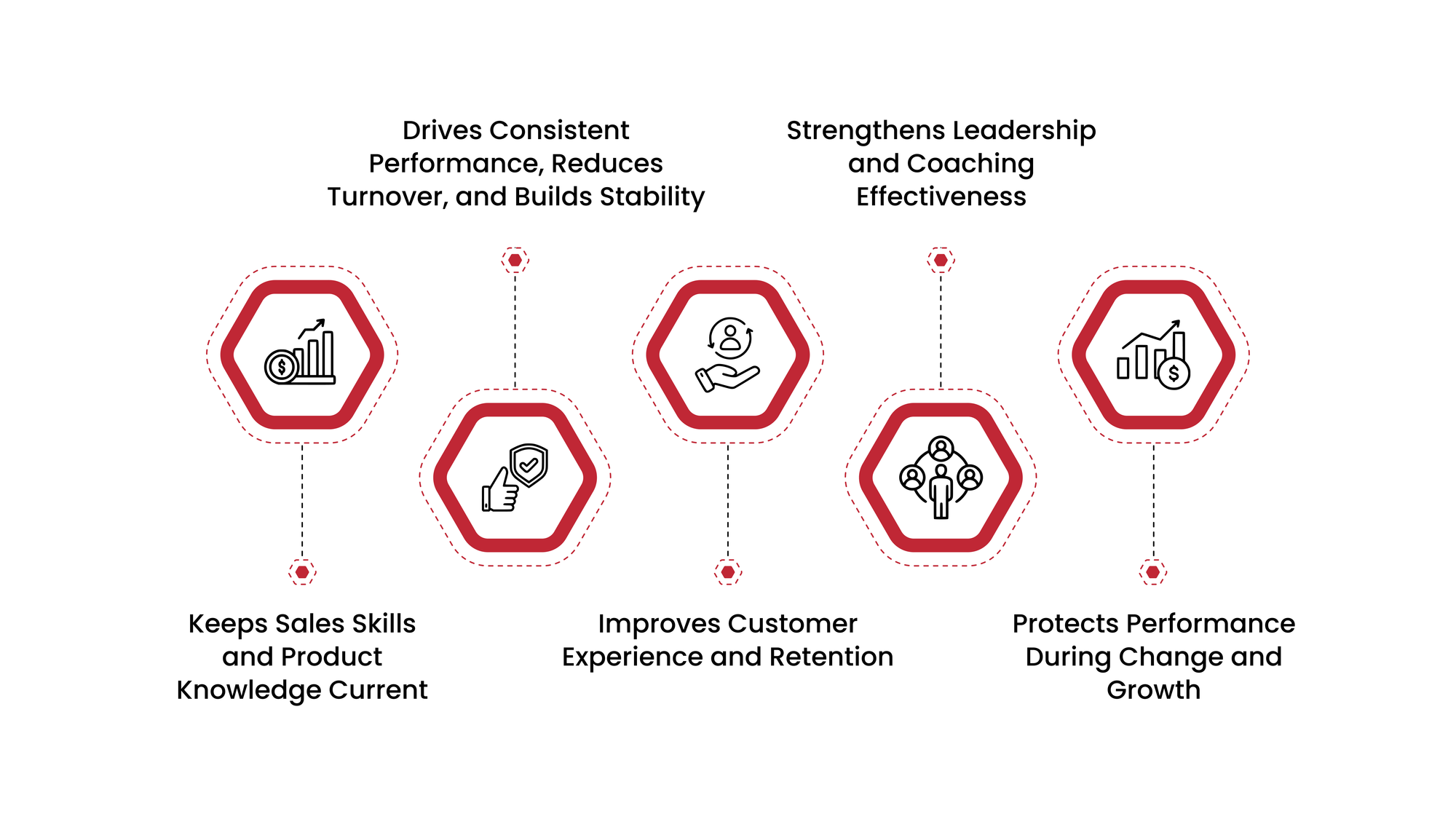
Continuous training changes how a dealership performs day after day. When learning continues, improvement compounds. Over time, this creates stability across departments and supports growth that holds even as inventory, markets, and customer behavior shift.
Keeps Sales Skills and Product Knowledge Current
Sales skills and product knowledge fade quickly when pressure replaces practice. Inventory changes, incentives shift, and customer expectations evolve. Without continuous training, salespeople fall back on outdated information or shortcut the conversation by moving to price too early.
Ongoing training keeps skills aligned with current market standards. Skills refresh regularly, not once or twice a year. Product knowledge stays practical because it connects features to customer priorities. Consistency improves because every salesperson follows shared standards rather than individual preferences.
Continuous training keeps teams current by
- Reinforcing discovery and presentation skills: Salespeople practice how to ask better questions and position vehicles based on today’s buyers.
- Updating product and technology knowledge: Features, trims, and incentives stay accurate and usable in live conversations.
- Reducing reliance on price-first selling: Confidence replaces shortcuts when knowledge stays sharp.
When skills stay current, conversations remain controlled. Customers receive more precise guidance. Sales performance becomes easier to sustain over time.
Drives Consistent Performance, Reduces Turnover, and Builds Stability
Inconsistent performance often gets dismissed as a motivation issue. Most of the time, it is a support issue. Salespeople perform better when expectations are clear and training is regular. Continuous training removes the peaks and valleys caused by forgotten processes and uneven coaching.
Ongoing development also impacts retention. Teams that receive regular training feel supported and capable, not isolated or overwhelmed. Confidence rises because people know what is expected and how to adjust when results slip. That stability reduces burnout and shortens the learning curve for new hires.
Continuous training supports stability by
- Creating predictable daily execution: Salespeople follow the exact lead handling, follow-up, and showroom processes regardless of traffic.
- Reducing avoidable turnover: Regular development increases engagement and decreases frustration caused by uncertainty.
- Shortening ramp-up time for new hires: Skills build faster when training supports clear daily expectations.
Stable teams produce stable results. Consistency protects volume, gross, and culture while allowing the dealership to grow without constant disruption.
Improves Customer Experience and Retention
Customer experience improves when behavior stays consistent at every touchpoint. Buyers notice when follow-up changes from one visit to the next or when answers differ depending on who they talk to. Continuous training reduces that inconsistency by reinforcing how customers are greeted, guided, and supported throughout the buying process.
Ongoing development also sharpens how teams listen. Better discovery leads to recommendations that feel relevant, not generic. Conversations stay calm under pressure. Explanations stay clear. Customers feel understood rather than managed. That experience builds trust, which influences both the initial purchase and future service loyalty.
Continuous training improves experience by:
- Maintaining consistent communication: Customers receive clear, accurate information regardless of channel or staff member.
- Improving confidence throughout the process: Well-trained teams guide decisions without confusion or rework.
- Strengthening long-term relationships: Buyers return because the experience feels reliable, not transactional.
Retention improves when customers remember the dealership as organized, helpful, and easy to work with. Continuous training keeps that experience intact, even during busy or high-pressure periods.
Strengthens Leadership and Coaching Effectiveness
Sustained growth depends on leadership consistency. Managers set the pace, reinforce standards, and shape daily execution. Continuous training gives leaders a shared framework to coach from rather than relying on personal style or memory. Expectations stay clear because they are reinforced regularly.
Managers also gain better coaching habits. Observation improves. Feedback becomes specific. Adjustments are made before problems appear on the month-end report. Leadership becomes proactive rather than reactive.
Continuous training supports leadership by
- Standardizing coaching expectations: Managers reinforce the same behaviors across teams and shifts.
- Improving day-to-day coaching discipline: Feedback happens routinely, not only when results slip.
- Building confidence in decision-making: Leaders coach with clarity.
Strong leadership makes improvement sustainable. Training keeps managers aligned as the dealership grows.
Protects Performance During Change and Growth
Dealerships operate in constant change. Inventory supply shifts. Digital processes evolve. Staffing levels fluctuate. During periods of growth or disruption, performance often slips because teams revert to old habits. Continuous training prevents that slide by consistently reinforcing fundamentals.
Regular reinforcement keeps execution intact even as conditions change. New processes are adopted faster, and expectations are reset quickly. Growth happens without sacrificing quality or control.
Continuous training protects performance by
- Maintaining process discipline during busy periods: Standards hold even when volume increases.
- Supporting smoother adoption of new tools and workflows: Teams adjust without confusion or resistance.
- Reducing performance drop-offs during staffing changes: Transitions stay controlled and predictable.
Growth becomes sustainable when execution remains steady. Continuous training keeps performance anchored as the dealership evolves.
Core Areas of Continuous Learning in Dealerships
Continuous learning delivers results when it stays focused on the areas where performance is created or lost every day. Dealerships that grow steadily do not treat learning as background support. They use it to reinforce execution across sales, leadership, and operations.
Effective programs concentrate learning in four core areas that directly influence outcomes.
- Sales execution and consistency: Ongoing development sharpens discovery, presentation, and closing behavior, ensuring performance remains consistent across people and shifts.
- Customer experience and retention: Reinforcing communication standards and follow-up expectations improves trust and repeat business.
- Responsiveness to change: Regular learning keeps teams aligned as inventory, digital processes, buyer expectations, and regulations shift.
- Improvement mindset across the store: Training that reinforces adaptability and accountability encourages teams to correct issues early rather than accept drift.
Once these priorities are clear, learning becomes easier to direct and easier to measure. The next step is connecting development efforts to performance indicators so training stays practical and targeted.
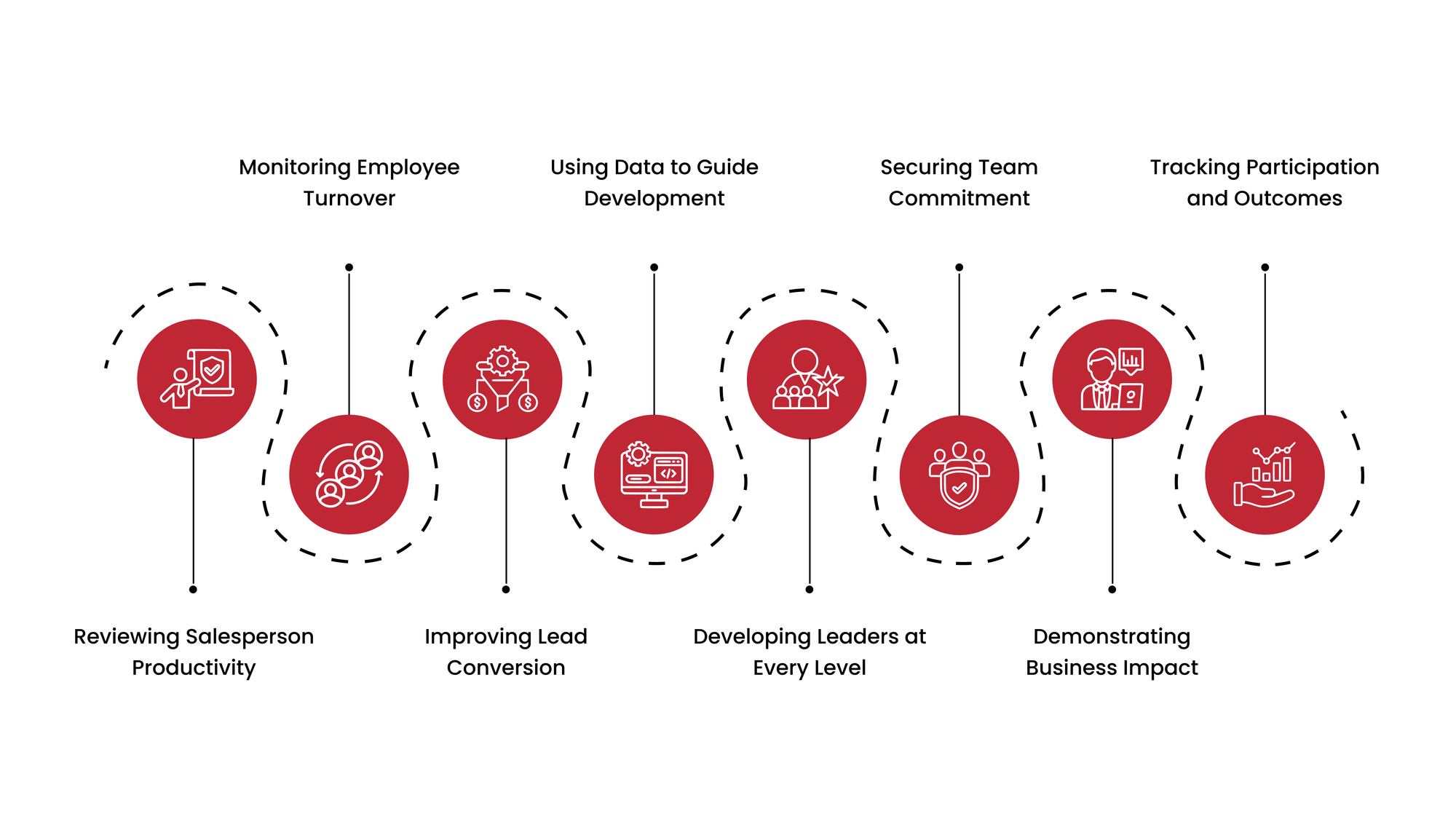
Reviewing Salesperson Productivity
Productivity improves when learning responds to reality rather than averages. Tracking salesperson output reveals where skill gaps exist and where coaching will deliver the fastest return. Conversion rates, appointment outcomes, deal flow, and customer feedback highlight behavior patterns that need correction.
Targeted learning tied to these insights improves results faster than broad sessions. Salespeople gain clarity because coaching links directly to what they do each day. Managers gain control because development focuses on specific improvement opportunities rather than general effort.
Monitoring Employee Turnover
Turnover rarely stems from compensation alone. Patterns often point to gaps in leadership support, unclear expectations, or limited growth pathways. Continuous training reduces those gaps by reinforcing structure and consistency across departments.
When development remains visible and ongoing, teams feel supported and engaged. Retention improves because employees see progress, not stagnation. Stability follows as hiring disruption slows and performance becomes more predictable.
Improving Lead Conversion
Lead conversion improves when teams continuously refine engagement habits. Training that emphasizes response timing, messaging clarity, and follow-up structure keeps conversations active longer and decisions moving forward.
Regular review of where leads stall helps adjust behavior before losses become routine. Small refinements applied consistently produce meaningful gains without adding pressure or volume.
Using Data to Guide Development
Operational data points directly to learning priorities. CRM activity, response behavior, pipeline movement, and customer outcomes reveal where skills erode or processes slip.
When data informs training, development stays relevant. Time spent learning aligns with needs, which keeps participation high and results measurable.
Developing Leaders at Every Level
Leadership behavior shapes execution speed and consistency. Continuous development for managers strengthens coaching habits and reinforces expectations across the team.
Leaders who receive regular training coach with clarity and confidence. Feedback improves. Corrections happen sooner. Teams perform better because direction stays steady.
Securing Team Commitment
Learning only works when teams believe it helps them succeed. Participation rises when development connects to confidence, income stability, and career progress.
Involving employees in shaping training priorities builds ownership. Adoption improves when people see learning applied in daily work rather than discussed in isolation.
Demonstrating Business Impact
Ongoing training sustains executive support when progress is visible. Measuring performance before and after implementation shows how learning contributes to stronger execution.
Improvement tied to profitability, retention, and consistency makes development a growth driver rather than a cost.
Tracking Participation and Outcomes
Training activity has value when linked to performance. Monitoring participation alongside execution metrics reveals where learning delivers results and where gaps remain.
Comparing top producers and developing performers highlights which behaviors should be targeted for training next. Development stays focused because evidence guides direction.
Why Many Dealerships Fail to Get Continuous Training Right
Most dealerships agree that training matters. Execution breaks down when training lacks structure, rhythm, and follow-through. Continuous training fails not because teams resist learning, but because the approach does not align with the pace and pressure of the dealership environment.
One-Time Workshops Are Not Enough
Single sessions create short-term awareness, not lasting behavior change. Salespeople leave a workshop with good intentions, then return to full inboxes, ringing phones, and live customers. Skills fade when ongoing practice and feedback disappear.
Market conditions shift faster than workshop schedules, leaving teams working from outdated information and habits. Without repetition and application, learning never becomes execution.
Inconsistent or Irregular Training Schedules
Irregular training creates uneven performance. Some team members receive regular coaching and follow-up, while others depend on memory or personal habits. Processes drift between shifts and departments. Managers struggle to coach effectively because standards are inconsistent.
Without a structured cadence, training feels optional, weakening accountability and performance.
High Turnover and Burnout Undermine Gains
High turnover interrupts development and erases progress. Sales and BDC roles face constant pressure, and without visible growth opportunities, burnout accelerates. New hires require the same training repeatedly, pulling attention away from experienced staff.
Continuous development reduces fatigue by building confidence and support, keeping teams stable long enough for learning to produce gains.
What Effective Continuous Training Looks Like
Effective continuous training works because it fits into daily dealership operations. It does not disrupt the workday or rely on isolated events. It stays present through peak traffic, staffing changes, and inventory shifts. The goal is simple: keep execution consistent so results hold up under pressure.
Strong programs focus on application, not volume. Learning stays connected to real-world activities rather than abstract scenarios. Teams improve faster when training shapes behavior during real opportunities. Growth becomes predictable because expectations remain steady.
Below are the core elements that define an effective continuous training program inside a dealership.
Reinforce Standards, Improve Coaching, and Drive Results With ATN
Sustained growth does not come from motivation or isolated training sessions. It comes from consistent execution supported every day. Continuous training protects performance during busy periods, strengthens leadership, and keeps teams aligned as conditions change.
Automotive Training Network (ATN) delivers continuous, in-dealership training built for dealership operations. With more than four decades of automotive experience and over 12,000 dealerships trained, ATN focuses on behavior that drives results, not theory or temporary enthusiasm. Training happens inside your store, tied to live activity, leads, and current challenges.
ATN continuous training helps dealerships
- Maintain sales consistency: Reinforce lead handling, follow-up, and showroom execution
- Develop stronger leaders: Equip managers to coach effectively and apply standards consistently each day
- Protect customer experience: Create reliable communication across every touchpoint
- Reduce turnover: Support teams with ongoing development and clear expectations
- Sustain growth: Turn improvement into a routine part of dealership operations
Partner with Automotive Training Network to create a culture of learning that drives consistent performance, confident teams, and long-term growth.