Why Does Microlearning Make Virtual Automotive Training More Effective?

Training only works when people remember and apply what they learn. Yet research on learning retention shows that most individuals quickly lose a large portion of new information, with as much as 90% of what they learn fading within a week without reinforcement. This reality presents a major challenge for dealership teams that rely on training to improve daily performance.
Long virtual training sessions can overwhelm attention and make it harder to retain key concepts. Even when the information is valuable, too much content delivered at once makes it difficult to recall details during real customer interactions.
Microlearning offers a more effective approach. By delivering short, focused virtual training sessions, dealerships can reinforce knowledge in manageable steps. This format improves retention, keeps teams engaged, and makes it easier to apply what they learn immediately on the showroom floor or during customer conversations.
What Is Microlearning in Virtual Automotive Training?
Microlearning is a training approach built around short, focused lessons that target one skill or concept at a time. Instead of sitting through long virtual sessions, dealership teams learn in smaller segments that are easier to absorb and apply.
In virtual automotive training, microlearning typically takes the form of brief modules delivered via video, live virtual coaching, interactive scenarios, or quick refreshers. Each session focuses on a specific topic, such as explaining EV charging, handling objections, or improving follow-up conversations. This focused format helps learners stay engaged without feeling overwhelmed.
Microlearning also fits naturally into dealership schedules. Sales professionals, BDC agents, and service teams can complete short training sessions between customer interactions, allowing learning to continue without disrupting daily operations. Over time, these short lessons build stronger knowledge, reinforce habits, and support consistent performance.
Why Conventional Long Training Sessions Often Fall Short?
Regular training sessions often deliver valuable information, but their length can limit how much learners actually retain and use. When sessions run too long, attention drops, fatigue sets in, and important details become harder to recall during real customer interactions.
Long sessions also struggle to align with the fast pace of dealership operations, making it difficult for teams to stay engaged while balancing daily responsibilities.
Common challenges with longer training formats include:
- Information overload: Too much content delivered at once makes it harder to absorb and remember key points.
- Reduced attention over time: Focus naturally declines during extended virtual sessions.
- Limited immediate application: Learners may struggle to connect broad topics to specific daily tasks.
- Disruption to daily workflow: Long sessions pull teams away from customer-facing responsibilities.
- Lower retention rates: Without reinforcement, knowledge fades quickly after training ends.
These limitations highlight the need for a training approach that supports retention and real-world application, which is where microlearning provides a clear advantage.
Why Do Short Sessions Work Better in Automotive Training?
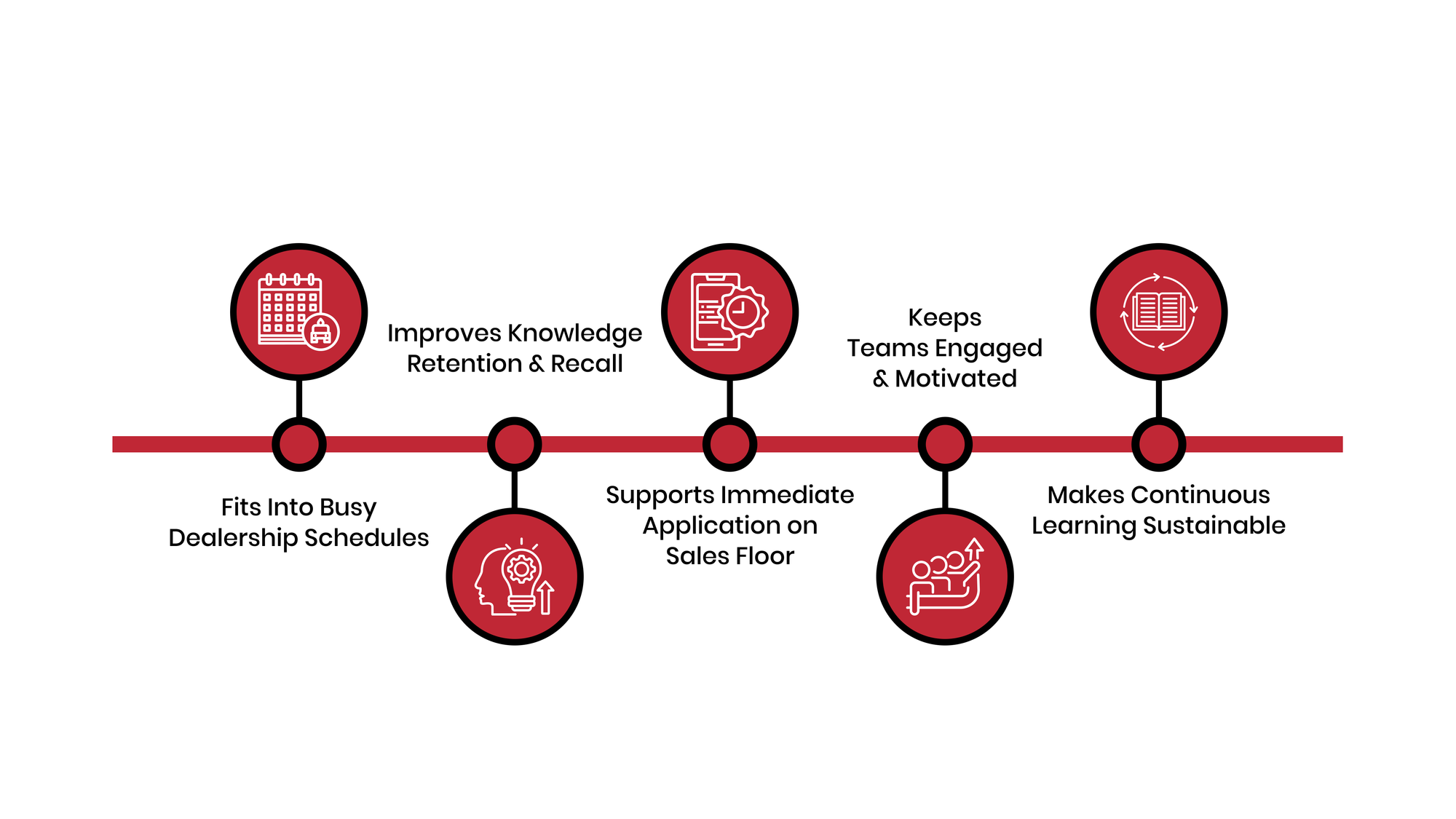
Dealership teams operate in fast-moving environments where long training sessions can interrupt productivity and reduce engagement. Microlearning aligns with how automotive professionals actually work, delivering focused lessons that fit naturally into the flow of the day. This approach helps teams learn consistently without stepping away from customer responsibilities.
1. Fits Into Busy Dealership Schedules
Customized microlearning makes training manageable by breaking it into short sessions that can be completed between daily tasks. This allows sales professionals, BDC agents, and service teams to continue developing skills without disrupting customer interactions.
Short sessions support learning by:
- Fitting into natural breaks: Training can happen between appointments or follow-ups.
- Reducing workflow disruption: Teams stay productive while continuing to learn.
- Making learning more accessible: Short modules feel easier to complete consistently.
Example: A sales professional watches a five-minute virtual training module on a new vehicle feature between showroom appointments. The information is fresh and immediately useful during the next customer conversation.
2. Improves Knowledge Retention & Recall
Microlearning improves retention by delivering information in smaller, focused segments. This reduces cognitive overload and allows learners to absorb and recall key concepts more effectively.
Short sessions improve retention by:
- Focusing on one concept at a time: Learners absorb information more clearly.
- Reinforcing knowledge through repetition: Frequent refreshers strengthen memory.
- Supporting long-term recall: Information becomes easier to retrieve during real interactions.
Example: A series of short sessions on EV charging helps sales professionals explain charging options confidently, even weeks after the training.
3. Supports Immediate Application on Sales Floor
Microlearning allows teams to apply what they learn right away. Because lessons are short and focused, sales professionals can connect training directly to their next customer interaction.
This improves real-world application through:
- Immediate relevance: Skills are fresh when conversations occur.
- Stronger confidence: Sales professionals feel prepared to address questions.
- Clear skill reinforcement: Learning becomes part of daily habits.
Example: A BDC agent completes a short virtual module on handling pricing objections and applies the approach during a customer call later the same day.
4. Keeps Teams Engaged & Motivated
Short sessions feel more approachable and achievable, which increases participation and completion. Interactive microlearning formats also make training more engaging.
This improves engagement by:
- Reducing fatigue: Short sessions hold attention more effectively.
- Encouraging consistent participation: Teams are more likely to complete training regularly.
- Creating momentum: Frequent progress keeps motivation high.
Example: Sales teams complete short quizzes on CRM follow-up practices to reinforce skills while maintaining engagement.
5. Makes Continuous Learning Sustainable
Microlearning supports ongoing development by making it easier to deliver regular training updates. This ensures dealership teams stay current with evolving vehicle technology and customer expectations.
Sustainable learning is supported through:
- Frequent skill reinforcement: Knowledge stays fresh over time.
- Easy updates: New content can be delivered quickly.
- Continuous development: Learning becomes part of daily operations.
Example: Monthly microlearning sessions introduce new vehicle models, helping sales teams stay informed and confident with customers.
Practical Applications of Microlearning in Virtual Automotive Training
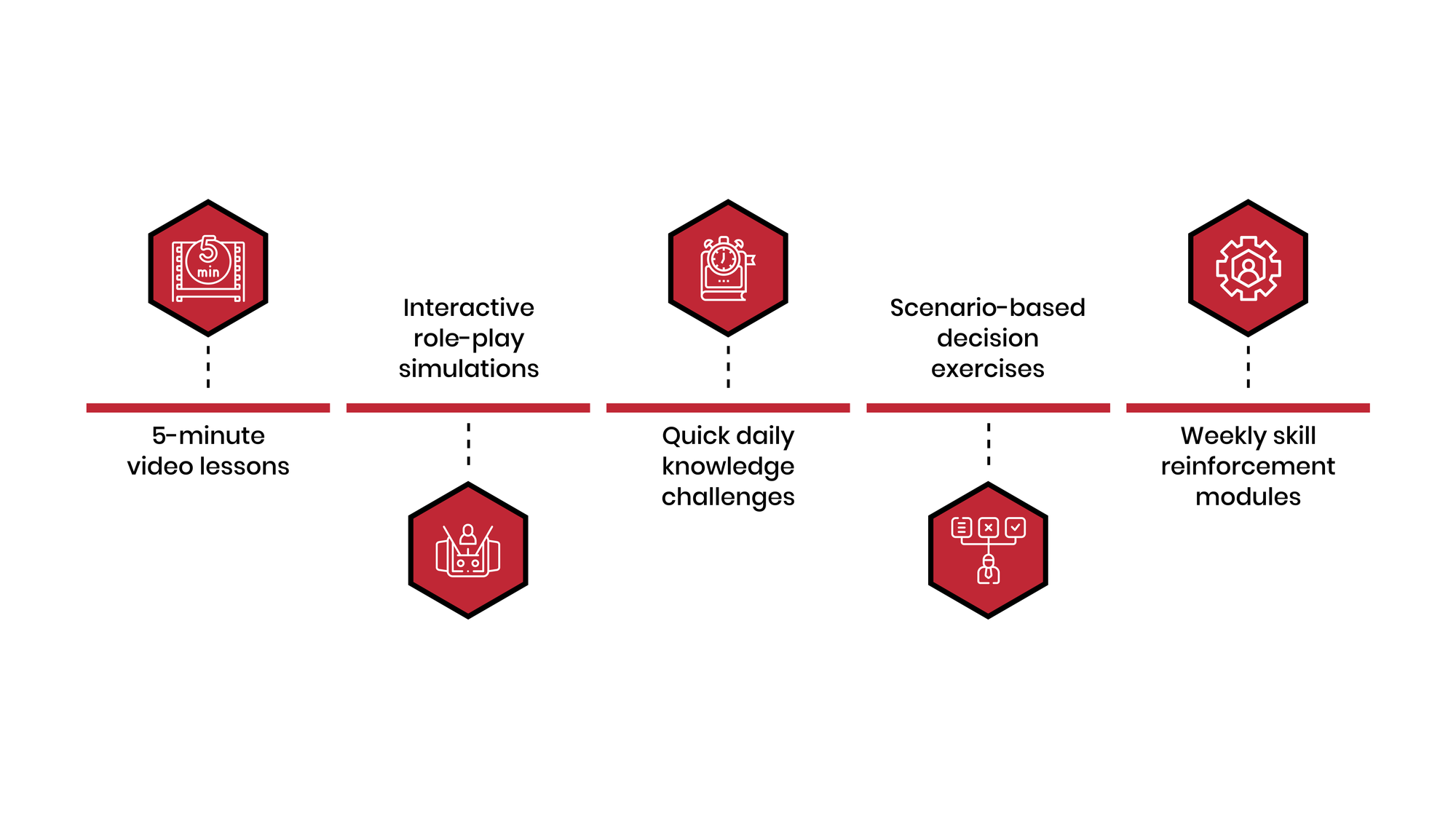
Microlearning in targeted virtual automotive training focuses on short, focused sessions that fit naturally into the dealership workday. These sessions use engaging formats that help teams learn quickly and apply skills immediately. Rather than relying on long lectures, microlearning delivers practical, real-world training in manageable steps.
Common microlearning formats include:
- 5-minute video lessons: Short videos covering specific topics such as EV charging explanations, new model features, or follow-up techniques.
- Interactive role-play simulations: Virtual scenarios where sales professionals practice customer conversations and receive feedback.
- Quick daily knowledge challenges: Brief quizzes or prompts that reinforce product knowledge or communication skills.
- Scenario-based decision exercises: Learners choose how to respond to customer situations and see the outcomes of their decisions.
- Weekly skill reinforcement modules: Short refresher sessions that strengthen core skills like objection handling or appointment setting.
This example shows how microlearning fits into a typical dealership schedule without disrupting daily operations:
This structure keeps training consistent, manageable, and directly connected to daily dealership tasks. Over time, these short sessions build stronger knowledge, improve confidence, and support continuous performance improvement.
How Can Dealerships Implement Microlearning Successfully?
Microlearning delivers the best results when it becomes part of the dealership’s regular training rhythm rather than an occasional activity. With the right structure and follow-through, dealerships can turn short virtual sessions into meaningful skill development.
Start with these practical steps:
- Break longer training into shorter modules: Divide complex topics into focused sessions that cover one skill or concept at a time. This makes learning easier to absorb and apply.
- Deliver training consistently: Schedule microlearning sessions regularly, such as daily or weekly, to reinforce habits and maintain momentum.
- Align lessons with real dealership tasks: Focus training on situations teams face every day, including follow-ups, product explanations, and customer conversations.
- Track completion and performance: Monitor participation and progress to ensure teams stay engaged and to identify areas that need additional support.
- Reinforce learning with coaching: Managers and trainers should reinforce lessons through real-time feedback, helping teams apply new skills confidently.
When implemented thoughtfully, microlearning becomes a sustainable training approach that strengthens performance while fitting naturally into dealership operations.
Build Stronger Sales Skills Faster With Automotive Training Network’s Virtual Microlearning

Training works best when it fits the dealership’s pace. Automotive Training Network delivers virtual training built around microlearning principles, helping sales, BDC, and service teams strengthen skills through short, focused sessions that support real performance.
ATN’s virtual training approach reinforces learning in manageable steps, making it easier for teams to retain knowledge, apply new techniques, and stay confident during customer interactions. Each session aligns with real dealership conversations, ensuring training remains practical and relevant.
With Automotive Training Network, dealerships benefit from:
- Virtual microlearning sessions: Short, focused training that fits into daily dealership schedules.
- Real-world sales and customer scenarios: Lessons that reflect actual showroom and customer interactions.
- Continuous skill reinforcement: Ongoing training that keeps knowledge fresh and actionable.
- Flexible virtual delivery: Training accessible from anywhere without disrupting operations.
- Proven dealership expertise: Guidance shaped by decades of working with automotive teams.
If your dealership wants training that teams remember and use every day, Automotive Training Network’s virtual microlearning programs provide the structure and support to make it happen.