Why Dealerships Lose Sales & How In-Dealership Coaching Can Fix It

You already generate leads. Phone ups come in. Walk-ins show up.
Still, deals that should have been sold quietly disappear. Most dealerships do not lose sales at the desk or because of price. Sales are lost much earlier, during the first response, follow-up, CRM entries, and everyday execution that feels routine but breaks under real pressure.
Industry studies show the scale of the issue. More than 43 percent of dealership leads are mishandled or never properly followed up on. Many stores still respond hours later. Follow-up drops off after one or two attempts, even though most buyers purchase within the first few days after submitting a lead. Each delay pushes a ready buyer toward another store.
The real issue is inconsistent execution inside the dealership. One-time training or fresh scripts cannot correct daily habits on their own. Sales improve when coaching happens on the floor while real deals are still in play. That is how in-dealership coaching fixes the sales that most stores never realize they are losing.
Top 5 Reasons Why Dealerships Lose Sales Today
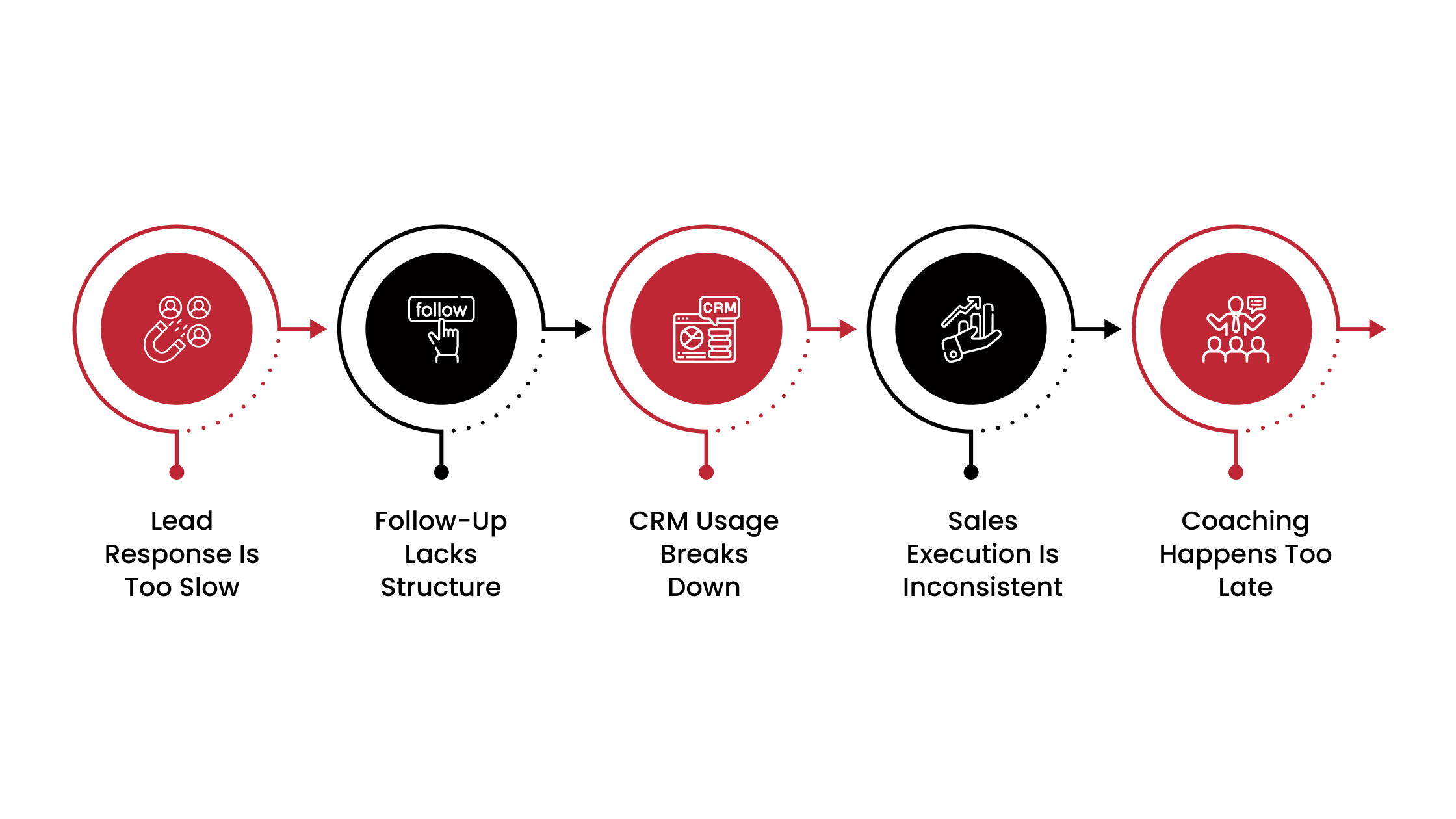
Sales do not disappear because customers stop buying. Sales disappear because execution breaks down during moments that feel small but matter most.
Lead Response Is Too Slow
Slow or uneven lead response causes the first loss. Shoppers submit leads while comparing multiple dealerships simultaneously. Response delays measured in minutes often turn into hours once the showroom gets busy. Once another store replies first, the conversation almost never comes back.
Follow-Up Lacks Structure
Follow-up lacks structure and persistence. One call or one email feels like an effort, but buyers rarely make a decision that quickly. Many leads need several contacts across calls, texts, and emails before engagement happens. When follow-up depends on memory instead of routine, opportunities fade quietly.
CRM Usage Breaks Down
CRM discipline breaks under pressure. Conversations happen. Notes go unwritten. Next steps never get set. Pipeline visibility becomes unreliable, so managers coach from reports that do not reflect reality. Leads do not look lost, even though they already are.
Sales Execution Is Inconsistent
Sales processes vary by personality, not process. One salesperson builds value and sets clear next steps. Another jumps straight to price. Another avoids follow-up altogether once objections appear. Customers feel the inconsistency and respond by disengaging.
Coaching Happens Too Late
Managers stay reactive instead of coaching. Desking, problems, and paperwork consume the day. Coaching occurs only after deals fail. Without observation, feedback, and correction during live activity, habits stay unchanged.
Sales improve when execution becomes consistent and visible.
Training vs. In-Dealership Coaching
Most dealerships invest time and money in training, including product knowledge sessions, process refreshers, and outside speakers. Training has value because it explains what should happen. What training rarely ensures is that those behaviors actually occur when customers call, walk in, or submit leads.
Ongoing training works in general terms. Everyone hears the same message at the same time, removed from live deals and absolute pressure. Salespeople leave motivated, then return to a full showroom, ringing phones, and stacked follow-ups. Old habits resurface quickly because nobody is watching the next call, email, or CRM entry.
In-dealership coaching operates inside the workday. Coaches listen to real calls, review live follow-up, observe showroom conversations, and correct issues immediately. Feedback is specific, not theoretical. Accountability ties to daily behavior, not attendance.
Salespeople improve because someone helps adjust how they respond, ask questions, log activity, and move deals forward in real time. That difference closes gaps that training alone never reaches.
How In-Dealership Coaching Fixes the Sales Leaks
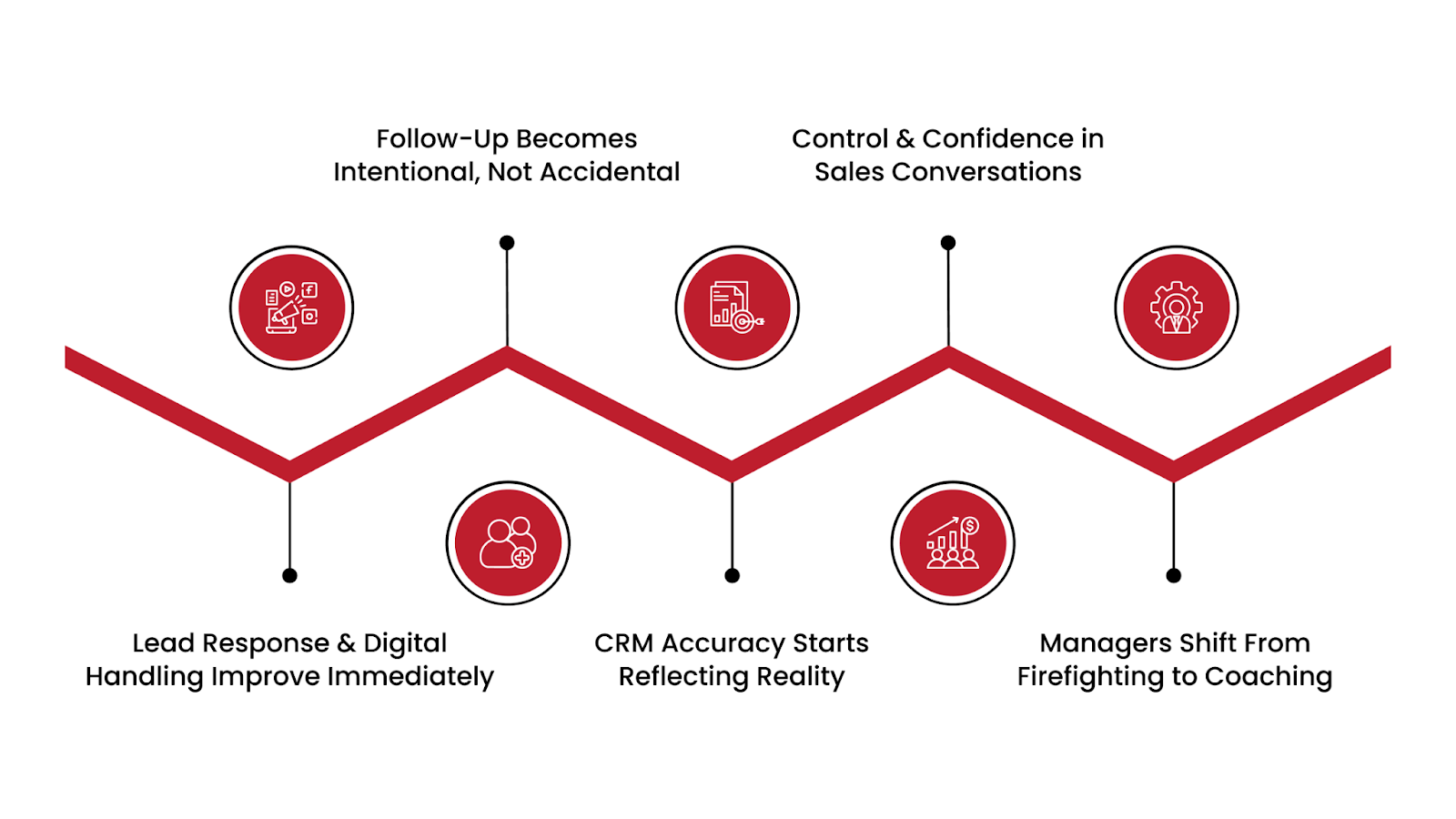
Real improvement does not happen during meetings or training days. Improvement happens while leads arrive, phones ring, customers walk in, and pressure builds. In-dealership coaching closes sales gaps by working in those moments, not around them.
Lead Response & Digital Handling Improve Immediately
Digital leads fail when response speed and message quality compete with daily chaos. Phones ring. Walk-ins arrive. Salespeople assume someone else will reply. Minutes pass. Interest drops. Another store steps in. These losses rarely show up as mistakes, yet they happen every day.
In-dealership coaching corrects this while leads are still active. Automotive Training Network’s (ATN) trainers sit inside your workflows, listening to first replies, reviewing live digital conversations, and correcting both timing and tone on the spot. Responses become more confident and directional, rather than rushed or generic. Ownership becomes clear. Every lead has a next step, not just a reply.
Digital handling also improves because execution becomes consistent across people and platforms. Text, email, phone, and CRM activity follow the same expectations. Lead handoffs stop breaking down. Instead of hoping the system works, teams learn how to work the system under real showroom conditions. Response speed improves. Engagement holds. More conversations turn into actual appointments.
Follow-Up Becomes Intentional, Not Accidental
Follow-up usually fails because the structure disappears under the workload. Coaching restores order by reviewing actual follow-up activity, not just reports. Messages improve because feedback occurs in real time during live conversations. Cadence becomes predictable. Buyers stay engaged longer because communication has direction instead of repetition.
ATN emphasizes practical follow-up systems that sales teams can maintain under pressure, including re-engagement of unsold showroom traffic.
CRM Accuracy Starts Reflecting Reality
Sales managers struggle to coach when visibility breaks down. Conversations happen, but they never show up accurately in the CRM. Notes are missing. Tasks expire. Pipelines look full while real opportunities disappear. Coaching inside the CRM fixes that problem because behavior becomes visible the moment it starts to drift.
ATN trainers work directly with managers and sales teams during live pipeline activity. Entries get reviewed alongside active deals, not weeks later. Standards around notes, next actions, and ownership become clear through repetition, not reminders. Habits improve because accountability happens during the workday, not after numbers are missed.
What improves through CRM-focused coaching
- Clear next-step ownership: Every opportunity has a defined action rather than sitting idle.
- Accurate opportunity staging: Deals reflect real buyer position rather than optimism.
- Consistent note quality: Managers see conversations, objections, and buying signals, not abbreviations.
- Reliable task completion: Follow-up occurs because activities are reviewed, not assumed.
- Cleaner pipeline visibility: Forecasting improves because the data better aligns with reality.
When CRM data becomes trustworthy, management behavior changes. Coaching becomes specific. Desking improves. Problems surface early instead of at the end of the month. ATN’s hands-on approach helps dealerships protect sales already in the pipeline instead of chasing what disappeared quietly.
Control & Confidence in Sales Conversations
Most breakdowns happen inside the conversation itself. Missed discovery, early price pressure, and rushed responses usually feel natural to the salesperson in the moment. Customers think the gap immediately. Live, in-dealership coaching addresses these issues where they occur, during calls, walk-ins, and deals.
ATN coaches work side by side with sales and BDC teams. Adjustments feel practical rather than forced, because coaching stays tied to the dealership’s actual inventory, market conditions, and buyer behavior.
Experience gained from training thousands of dealerships enables ATN to strengthen conversations without scripting, preserving authenticity while boosting performance.
What improves through live coaching
- Stronger needs assessment: Salespeople learn to slow the conversation, ask better questions, and uncover buying motives before discussing vehicles or numbers.
- Controlled objection handling: Common objections get addressed calmly and professionally, without defensiveness or pressure tactics.
- More confident pacing: Conversations stay structured and focused, reducing price-first discussions that weaken gross and trust.
- Clear next steps: Each interaction ends with a defined outcome, appointment, follow-up commitment, or progression in the buying process.
When conversations improve at the source, sales performance follows. Coaching removes guesswork from daily interactions and replaces it with consistency that produces appointments, trust, and closed deals.
Managers Shift From Firefighting to Coaching
Managers often spend days closing deals instead of developing people. Coaching changes that rhythm. Observation, feedback, and reinforcement become part of daily routines.
ATN supports leadership development by showing managers how to coach inbound calls, outbound activity, showroom flow, and service-to-sales opportunities without disrupting operations. Teams improve because leadership presence becomes consistent, not reactive.
How to Launch an In-Dealership Coaching Program
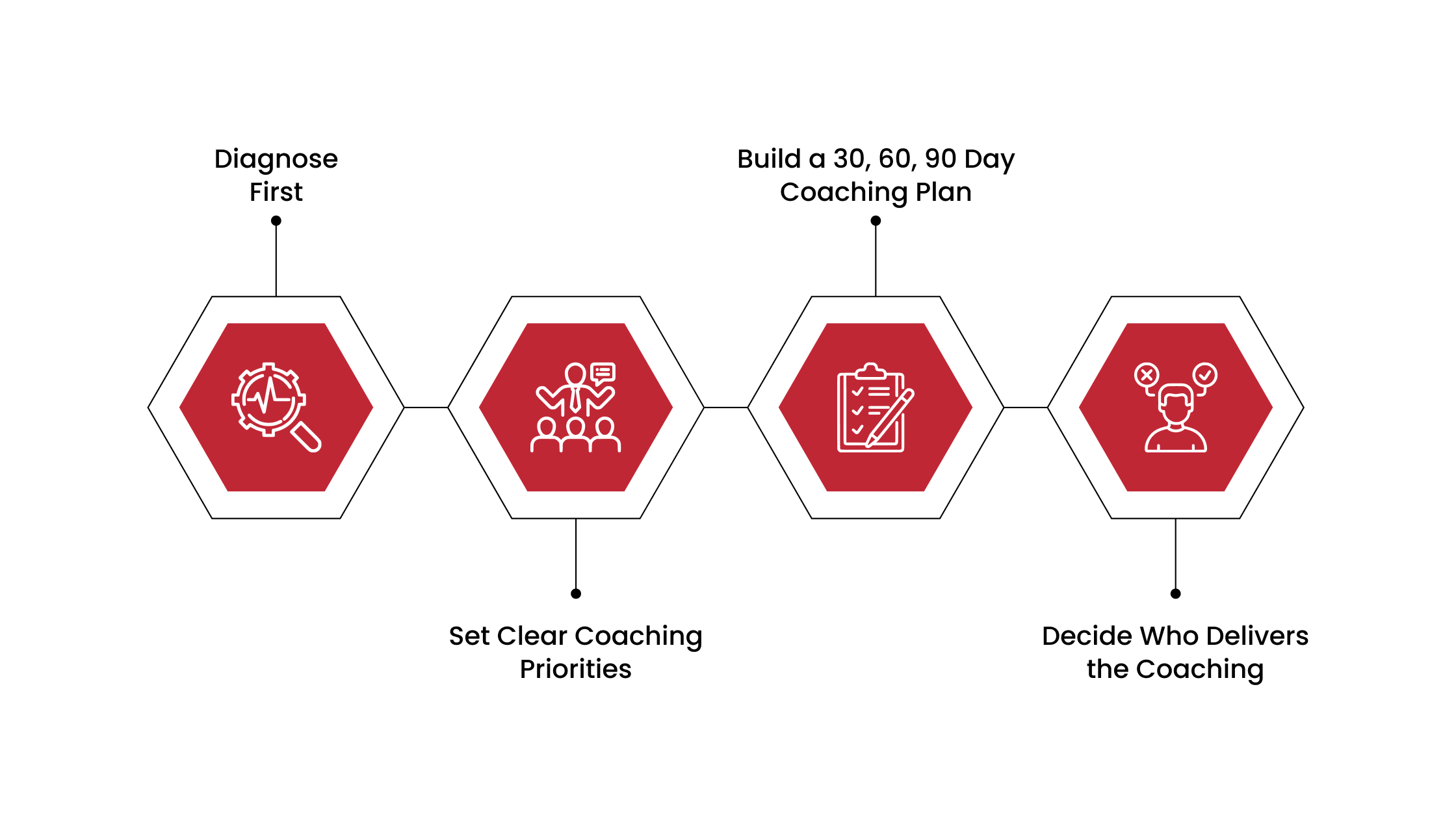
An in-dealership coaching program works when it starts with clarity and stays focused on execution. Success does not come from doing everything at once. It comes from identifying where sales actually break down, then fixing those areas with consistent, visible coaching.
Diagnose First
Coaching must start with an honest view of what is happening on the floor, on the phones, and inside the CRM. Assumptions hide problems. Observation exposes them. Review how leads are handled from first contact through follow-up.
Examine CRM activity for accuracy, ownership, and next steps. Evaluate how closely sales processes are followed during customer interactions. Training history matters here as well, since repeated training without behavior change often signals a coaching gap.
Set Clear Coaching Priorities
Trying to fix everything at once creates confusion and resistance. Strong programs focus on two or three breakdown points that most impact sales volume. Lead response time, inconsistent follow-up, and weak appointment show rates usually produce the fastest gains when corrected. Clear priorities give managers and salespeople direction and make progress visible quickly.
Build a 30, 60, 90 Day Coaching Plan
A defined timeline keeps coaching disciplined and measurable. The first 30 days focus on observation, baseline performance, and minor corrections that build momentum. The following 60 days introduce consistent coaching routines, call reviews, pipeline walkthroughs, and process reinforcement.
By 90 days, accountability increases and expectations tighten. What works gets repeated. What does not get adjusted? Coaching becomes part of daily operations rather than an extra task.
Decide Who Delivers the Coaching
Some dealerships rely on internal managers to coach, while others partner with experienced in-dealership coaching providers. Internal coaching requires managers who have time, structure, and coaching skills.
External partners bring consistency, outside perspective, and proven methods. Many dealerships succeed by combining both, building internal capability while reinforcing it through experienced in-store coaches.
Turn Missed Opportunities Into Consistent Sales Results With ATN

Dealership sales are lost when execution breaks down under real conditions. In-dealership coaching restores control by improving how teams respond, follow up, communicate, and manage opportunities while deals are still active.
Automotive Training Network delivers in-dealership coaching that works because it happens inside your operation, not outside of it. With more than 40 years of automotive training experience and support for over 12,000 dealerships, ATN focuses on behavior that drives results, not theory.
ATN in-dealership coaching helps dealerships
- Improve lead response and digital handling: Faster contact and clearer ownership across phone, text, and CRM activity.
- Strengthen sales conversations: Better discovery, confident objection handling, and controlled pacing.
- Create CRM accuracy: Cleaner pipelines, reliable follow-up, and real visibility for managers.
- Develop sales leadership: Managers coached to reinforce standards consistently.
- Convert more opportunities: Higher appointment shows, stronger close rates, and improved consistency.
ATN helps dealerships stop chasing missed sales and start protecting the ones they already have.
Partner with Automotive Training Network to build disciplined execution, confident teams, and repeatable sales performance.