6 Primary Components Every Successful Car Dealership BDC Must Have
Every second counts when a potential car buyer reaches out to your dealership. Industry research shows that contacting new leads within five minutes can dramatically improve your chances of converting them into a sale, sometimes increasing conversion rates by up to 900% compared to slower responses.
That’s an alarming gap for dealerships that aren’t set up to respond quickly and consistently. With car buyers expecting fast, personalized follow-up across phones, email, texts, and web forms, many dealerships are losing ground before they even step into the showroom. When leads go unanswered or follow-up is inconsistent, prospects drift to other stores where communication feels more reliable and professional.
This reality is why the Business Development Center (BDC) has become important to modern dealership success. A well-structured BDC engages customers with purpose, qualifies interest accurately, and drives solid appointment activity that fuels showroom traffic and sales.
In this blog, you’ll learn six critical components every successful car dealership BDC must have. Each one tackles a common struggle BDC leaders face and explains how to transform daily operations into measurable results.
What Is the Damage Behind Underperforming BDCs?
An underperforming BDC rarely feels like an immediate problem. Phones still ring. Leads continue to arrive. Appointments still appear on the calendar. Yet day after day, real opportunity quietly slips away.
Delayed responses, inconsistent follow-up, and unclear expectations create friction long before a customer ever reaches the showroom. Internet leads go unanswered overnight. Calls are handled without a clear objective. Conversations end without a defined next step. Each small breakdown reduces confidence and makes it easier for prospects to disengage.
The impact shows up across the dealership. Sales managers receive appointments that feel uncommitted. Marketing dollars stretch thinner as lead quality appears weaker than it truly is. BDC teams work hard, yet results vary widely because everyone operates a little differently. Over time, leadership sees activity without momentum and volume without predictability.
None of this comes from a lack of effort. It comes from missing structure, coaching, and alignment. Without clear processes and ongoing guidance, even experienced BDC teams struggle to deliver consistent results.
6 Components Every Successful Car Dealership BDC Must Have
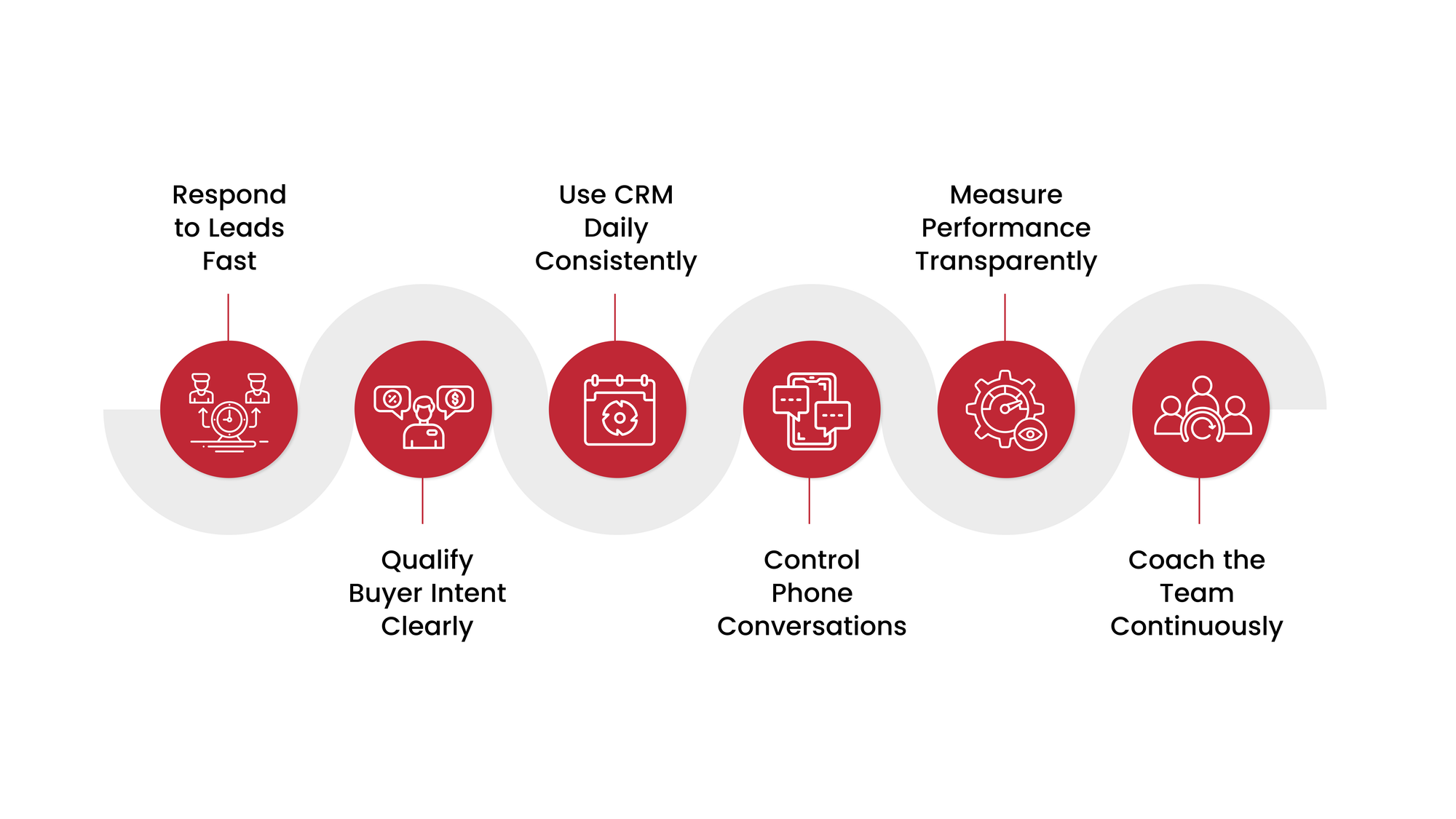
High-performing BDCs don’t rely on chance or individual effort alone. They follow a clear structure, consistent processes, and shared expectations that guide every interaction. The six components below help BDCs drive reliable appointments, support the sales team, and build stronger customer relationships.
1. Respond to Leads Fast
Consistency shapes how customers perceive your dealership long before they visit the showroom. When lead response varies by person, shift, or channel, customers experience uncertainty. High-performing BDCs remove that variability by setting clear engagement standards that guide every interaction.
Strong standards ensure every lead receives timely attention, a professional tone, and a clear next step. This builds customer confidence and holds the team accountable.
Effective lead response and engagement standards include:
- Response timing expectations: Clear guidelines for how quickly every inbound lead should be contacted, regardless of source or time of day.
- Channel consistency: A unified approach to phone, email, text, and digital inquiries so messaging feels cohesive rather than fragmented.
- First-contact objectives: Each initial interaction focuses on connection, understanding the customer’s intent, and moving the conversation forward.
- Documented communication practices: Notes and outcomes are recorded consistently, so no lead history is lost or repeated unnecessarily.
- Defined next steps: Every interaction ends with a clear plan, whether that means an appointment, follow-up contact, or continued engagement.
When engagement standards are clear and reinforced, BDC teams operate with confidence. Customers feel heard, conversations stay purposeful, and opportunities are far less likely to slip through the cracks.
2. Qualify Buyer Intent Clearly
Lead volume means little without a clear strategy for understanding intent and maintaining momentum. Successful BDCs operate with a structured approach that helps agents identify where each customer stands and how to move the conversation forward without guesswork.
A defined qualification and follow-up strategy brings focus to daily activity while keeping customer communication relevant and organized.
Core elements of an effective strategy include:
- Lead qualification criteria: Clear guidelines that help BDC agents determine readiness, urgency, and buying intent early in the conversation.
- Structured follow-up timelines: Consistent contact schedules that prevent leads from being forgotten or contacted too aggressively.
- Personalized messaging: Follow-up communication reflects the customer’s interests, questions, and previous interactions rather than generic outreach.
- Clear ownership: Each lead has an assigned point of contact responsible for ongoing communication and progress.
- Outcome-based tracking: Every follow-up action is tied to a specific goal, such as securing an appointment or confirming next steps.
When qualification and follow-up are clearly defined, BDC teams spend less time reacting and more time engaging with purpose. Customers experience thoughtful communication, and dealerships gain better visibility into where opportunities truly stand.
3. Use CRM Daily Consistently
A CRM system plays a central role in organizing, making visible, and ensuring consistency across the dealership. High-performing BDCs treat the CRM as a daily operating system rather than a passive database.
Effective CRM usage ensures every customer interaction is documented, every opportunity is tracked, and every team member works with the same information. This clarity reduces confusion and strengthens coordination between the BDC, sales, and management teams.
Successful CRM use includes:
- Consistent data entry: Every call, message, and outcome is logged accurately to maintain a complete customer history.
- Standardized workflows: Leads follow a defined path within the CRM so follow-up actions are clear and repeatable.
- Visibility across teams: Sales managers and leadership can easily review activity, progress, and performance.
- Task and reminder discipline: Follow-ups are scheduled and completed on time, preventing missed opportunities.
- Accountability tracking: CRM activity reflects real engagement, making performance easier to evaluate and improve.
When CRM habits are strong, BDC teams operate with clarity rather than guesswork. Conversations pick up where they left off, accountability improves, and customer experiences feel smooth and professional.
4. Control Phone Conversations
Phone conversations remain one of the most influential moments in the BDC process. The way calls are handled shapes customer confidence, determines appointment quality, and sets expectations before a showroom visit ever happens. Successful BDCs train their teams to control conversations with clarity, professionalism, and purpose.
Strong phone skills go beyond answering questions. They guide the interaction toward a clear outcome while making the customer feel comfortable and respected.
Effective phone and appointment practices include:
- Confident call openings: Agents establish rapport quickly and set a professional tone from the first few seconds.
- Purpose-driven conversations: Every call follows a clear structure that keeps discussions focused and productive.
- Appointment setting standards: Dates, times, and expectations are clearly communicated and confirmed.
- Consistent confirmation and follow-up: Appointments are reinforced through timely reminders and outreach.
- Handling hesitation: Common concerns are addressed calmly without pressure or defensiveness.
Automotive Training Network helps dealerships strengthen these skills through focused phone training, live coaching, and real-world scenarios that mirror daily BDC interactions. By reinforcing proven call structures and appointment control techniques, ATN helps teams convert more conversations into committed showroom visits with confidence.
5. Measure Performance Transparently
Strong BDC performance improves when expectations are clearly defined and consistently reinforced. Without clear measurement, activity can appear productive while results remain unpredictable. High-performing dealerships remove uncertainty by aligning daily effort with visible outcomes.
Clear performance measurement helps BDC teams understand what success looks like and how their actions contribute to dealership goals. It creates focus without micromanagement and encourages accountability at every level.
Effective performance measurement typically includes:
- Defined performance indicators: Expectations are set around response consistency, appointment activity, and follow-up completion.
- Transparent reporting: Results are visible to BDC leadership and management, supporting productive coaching conversations.
- Regular review cadence: Performance is reviewed consistently rather than only when issues arise.
- Individual accountability: Each team member understands their responsibilities and how they are evaluated.
- Aligned goals: BDC objectives support broader dealership priorities and sales targets.
When expectations are clear, teams operate with confidence rather than confusion. Measurement becomes a guide for improvement, helping BDC leaders coach effectively and maintain consistent results over time.
6. Coach the Team Continuously
Even the strongest BDC processes lose effectiveness without consistent reinforcement. Skills fade, habits drift, and performance becomes uneven when coaching stops after initial training. Successful dealerships treat development as an ongoing priority rather than a one-time event.
Ongoing coaching from automotive training companies keeps BDC teams aligned, confident, and prepared to handle real customer conversations. It allows leaders to address gaps early and build on strengths before issues impact results.
Effective coaching and skill development include:
- Regular skill refreshers: Core behaviors such as phone handling, follow-up, and appointment control are revisited consistently.
- Live feedback: Coaching focuses on real interactions rather than theory, making improvements practical and immediate.
- Process reinforcement: Training reinforces dealership standards so daily execution remains consistent.
- Individual development focus: Coaching adapts to each team member’s experience level and growth areas.
- Leadership involvement: Managers actively support development rather than relying solely on initial onboarding.
Automotive Training Network supports long-term BDC success through structured coaching, virtual training, and hands-on workshops that reinforce skills over time. This approach helps dealerships maintain consistency, improve confidence, and sustain performance well beyond the initial training phase.
Strengthen Your BDC With Proven Expertise from Automotive Training Network
A successful BDC does not happen by accident. It is built through clear standards, consistent coaching, and processes that support every customer interaction. When the right components are in place, dealerships gain stronger appointments, better communication, and more predictable results.
Automotive Training Network has helped 12,000 dealerships strengthen their BDC operations for over four decades by focusing on real-world execution and long-term performance. ATN works alongside dealership teams to reinforce structure, confidence, and accountability at every level.
Partnering with ATN gives your dealership access to:
- BDC-focused training programs: Structured training that strengthens phone skills, follow-up discipline, and appointment control.
- Flexible delivery options: Virtual training, in-store workshops, and immersive bootcamps that fit your team’s needs.
- Experienced coaching: Guidance grounded in real dealership operations, not theory.
- Customized strategies: Training aligned with your dealership’s size, goals, and workflow.
- Sustainable performance improvement: Ongoing reinforcement that helps teams maintain consistency over time.
If your goal is a BDC that supports your sales team, builds customer trust, and drives measurable results, Automotive Training Network is ready to help. Take the next step toward a stronger, more disciplined BDC today.