How Does In-Dealership Training Enhance Daily Work Plans and Time Management?

Time management remains a daily struggle across many workplaces, even when systems and processes are meant to improve efficiency. A recent report by The Wall Street Journal found that two-thirds of employees save less than two hours a week, or no time at all, on tasks intended to make work more efficient. That gap highlights a common issue: tools and intentions alone do not automatically translate into better time use.
Dealership environments make this challenge even more pronounced. Sales teams balance walk-ins, digital leads, follow-ups, paperwork, and customer conversations within the same day. Without a clear structure, priorities blur, tasks overlap, and valuable selling time slips away, often without anyone noticing until results start to suffer.
In-dealership training addresses this problem at its source. By working directly within the flow of daily operations, this training format helps teams organize their work plans, set clearer priorities, and manage time with purpose. Instead of adding more tasks to the day, it reshapes how the day is used, making productivity feel achievable rather than overwhelming.
What is In-Dealership Training?
In-dealership training takes place within the dealership during normal business operations, working with teams in the same environment where sales happen every day. Rather than pulling staff away for off-site sessions or relying on generic online modules, this approach integrates learning directly into daily routines, conversations, and responsibilities.
This training focuses on real tasks and real scenarios. Sales professionals practice handling live customer interactions, managing follow-ups, and organizing their day with guidance that reflects actual expectations. Trainers observe how time is used, where distractions occur, and how work plans unfold, then help teams adjust habits in ways that feel natural and sustainable.
In-dealership training also encourages shared structure. Sales managers and team members align on priorities, schedules, and processes, creating consistency across the floor. By embedding learning into the workday, training becomes part of how the team operates rather than an interruption, leading to better planning, clearer focus, and more effective time use.
How Time Management Works in the Workplace
Time management is about deciding what deserves attention first and when. At its best, time management brings structure to the workday, helping people stay focused, meet deadlines, and avoid the constant feeling of being behind.
Effective time management usually includes:
- Planning: Knowing what needs to be done before the day starts
- Prioritizing: Focusing on tasks that move results, not just fill time
- Focused execution: Reducing distractions to complete tasks efficiently
- Clear deadlines: Creating urgency and preventing work from drifting
Simple techniques support these habits. Many teams use priority lists, time blocks for specific tasks, and realistic daily goals to keep work organized. These methods create momentum instead of reaction.
Here’s what happens without structure:
A sales rep starts the day answering emails, jumps to a walk-in customer, forgets to return two important calls, enters notes late, and ends the shift feeling busy but unproductive. Follow-ups slip, stress rises, and performance suffers.
When time is managed intentionally, the day feels calmer and more purposeful. Tasks get completed in the right order, selling time increases, and job satisfaction improves because progress feels visible rather than chaotic.
Five Ways In-Dealership Training Improves Daily Work Plans and Time Management
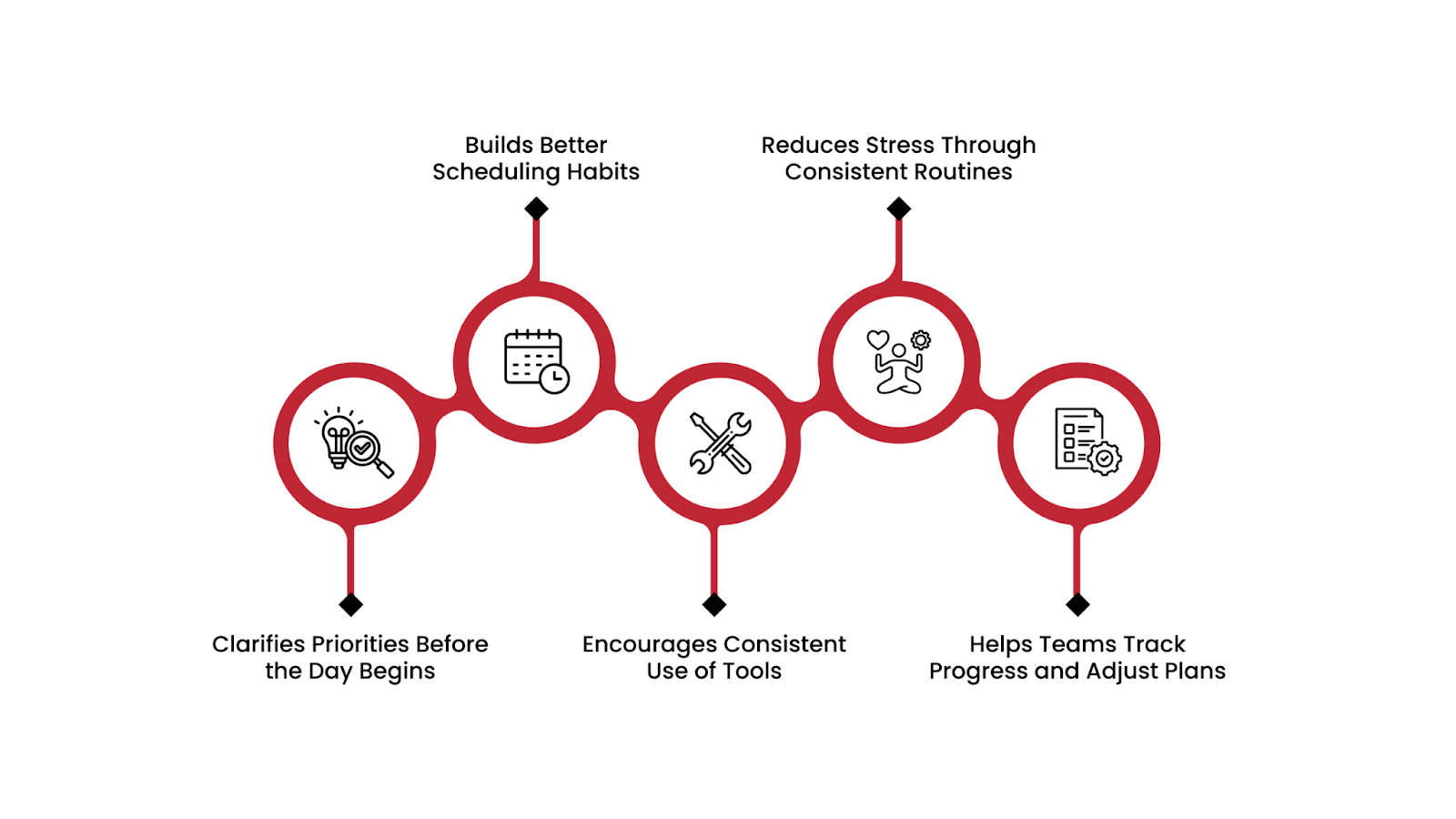
In-dealership training turns time management into a daily habit rather than an abstract concept. By working within real schedules, real interruptions, and real priorities, this training format helps teams plan their day with clarity and use time more intentionally. The five areas below show how in-dealership training strengthens daily work plans and supports better time use across the sales floor.
Clarifies Priorities Before the Day Begins
In-dealership targeted training helps teams start each day with intention rather than reaction. Instead of jumping between tasks as interruptions arise, sales professionals learn how to identify what truly matters before the showroom gets busy.
Training reinforces the habit of planning priorities early, which creates focus and reduces wasted time throughout the day.
What this looks like in practice:
- Structured morning planning: Sales teams begin the day by outlining their top priorities.
- Clear priority lists: Reps identify high-impact tasks before opening the floor.
- Shared alignment: Managers and sales staff agree on expectations for the day.
Builds Better Scheduling Habits
In-dealership training helps sales professionals structure their day rather than react to it. By learning how to block time intentionally, reps protect high-value tasks while still staying available for walk-in traffic.
Rather than drifting between responsibilities, training reinforces scheduling habits that create focus and consistency.
Example: A Simple Time-Blocking Structure
- 9:00–9:30 AM: Digital lead follow-up and customer callbacks
- 9:30–11:30 AM: Showroom traffic and scheduled appointments
- 11:30–12:00 PM: CRM updates and appointment confirmations
- 1:00–1:30 PM: Second lead follow-up block
- Afternoon: Walk-ins, test drives, and customer consultations
By assigning specific windows for follow-up and planning, sales professionals complete critical tasks without feeling rushed. This structure reduces distractions, improves follow-through, and makes the workday feel more controlled and productive.
Encourages Consistent Use of Tools
In-dealership training helps sales professionals use everyday systems consistently rather than treating them as optional. When calendars, CRM task lists, and reminders are built into daily routines, planning becomes automatic, and follow-up improves.
Training shows teams how these systems support their day instead of slowing it down. As a result, tools become part of the workflow rather than being updated later.
How this shows up on the sales floor:
- Calendar discipline: Appointments, follow-ups, and task blocks are scheduled and reviewed daily.
- CRM task ownership: Reps rely on task lists to guide their next action rather than memory.
- Built-in reminders: Follow-ups are triggered on time, reducing missed opportunities.
- Clear daily visibility: Sales professionals can see what needs attention at a glance.
Example:
A sales rep who once relied on notes and memory now starts each day by reviewing their CRM task list. Follow-ups are completed on time, priorities are clear, and the workday feels organized instead of reactive.
Reduces Stress Through Consistent Routines
Uncertainty is one of the biggest sources of daily stress on the sales floor. In-dealership training reduces that pressure by embedding clear processes into everyday routines, so sales professionals know what to do and when to do it.
When time planning becomes part of the routine, the workday feels more manageable. Instead of constantly reacting, reps move through tasks with confidence and purpose.
How this helps reduce stress:
- Clear daily structure: Reps begin each shift with a plan rather than a guessing game.
- Predictable workflow: Tasks follow a familiar rhythm, reducing mental overload.
- Fewer missed follow-ups: Organization prevents last-minute scrambles.
- Improved confidence: Knowing what comes next allows reps to stay composed with customers.
Example:
A sales rep starts each shift by reviewing their schedule, priority list, and follow-up tasks. With a clear plan in place, the day feels calmer, conversations feel more focused, and pressure no longer drives the pace of work.
Helps Teams Track Progress and Adjust Plans
In-dealership training reinforces the habit of reviewing progress rather than simply moving on to the next task. When teams regularly reflect on how the day went, they become better at adjusting plans and improving time use.
Managers can spot patterns during quick check-ins and offer guidance where needed. This simple activity builds awareness, encourages adjustment, and helps teams continuously refine their planning and time management.
Creative Daily Planning Activities to Try
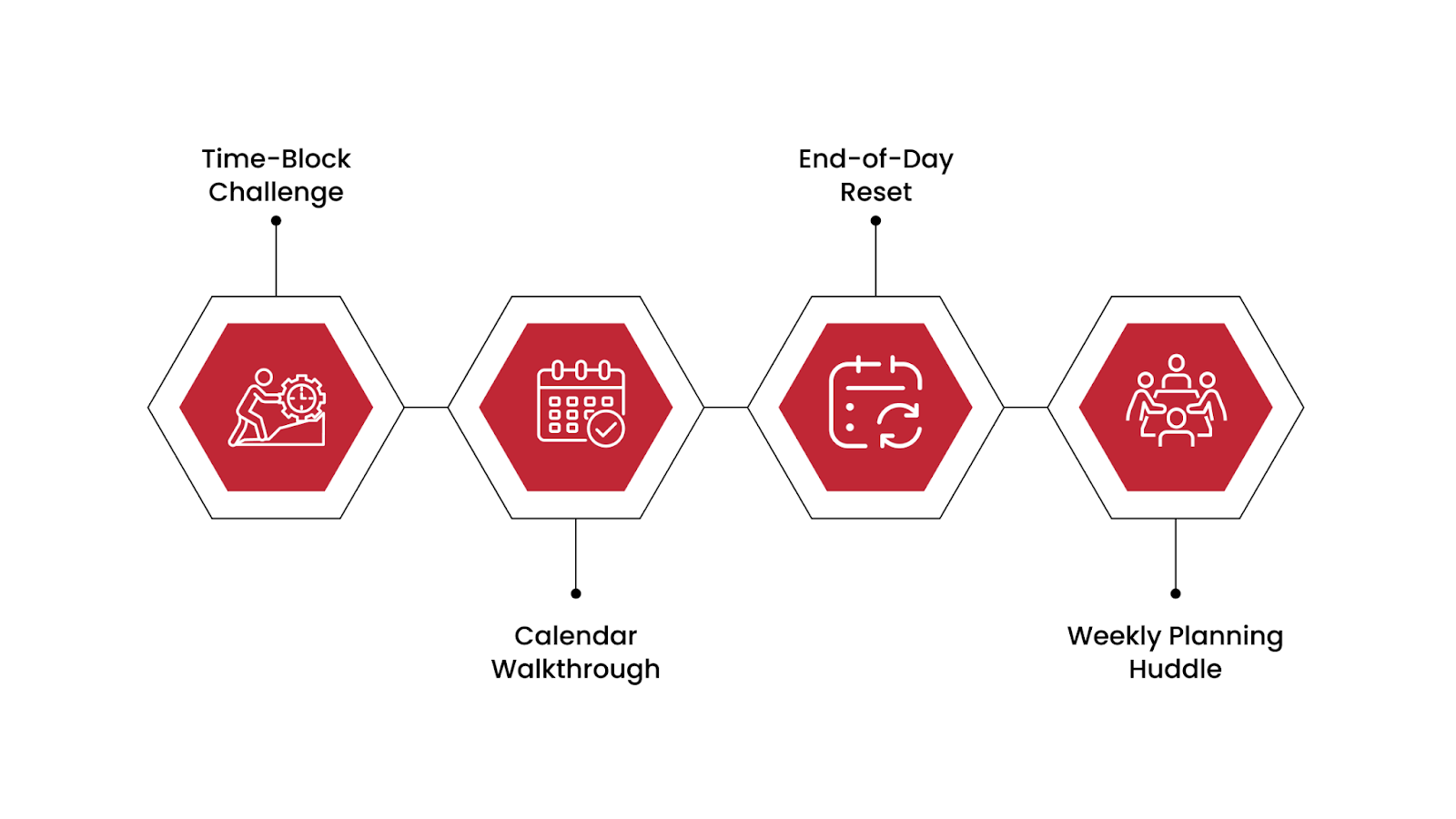
In-dealership training works best when planning becomes interactive and visible. These simple activities keep teams engaged, reinforce structure, and make time management feel practical rather than forced.
Try these activities on the sales floor:
- Time-Block Challenge: Reps commit to one focused time block for follow-ups or CRM updates. Phones, email alerts, and distractions are paused during the block to encourage deep focus.
- Calendar Walkthrough: Once a week, managers spend five minutes reviewing calendars with reps to ensure appointments, follow-ups, and planning blocks are clearly scheduled.
- End-of-Day Reset: Reps take two minutes before leaving to note what was completed, what moved forward, and what becomes tomorrow’s priority.
- Weekly Planning Huddle: Teams spend ten minutes mapping the week ahead, highlighting busy days, important appointments, and follow-up priorities.
These activities turn planning into a shared habit rather than an individual burden. Over time, they build consistency, reduce daily pressure, and help sales professionals stay in control of their schedule.
Activities like these work best when they’re reinforced in real time on the sales floor. Automotive Training Network specializes in in-dealership training that connects planning, time management, and daily execution.
Strengthen Daily Execution With ATN’s In-Dealership Training

Daily work plans and time management improve when training happens, where the work actually gets done. Automotive Training Network helps dealerships embed structure, clarity, and consistency into everyday routines through in-dealership training that aligns with real sales activity.
ATN’s customer-first dealership sales process training focuses on helping teams plan their day with purpose, manage time effectively, and stay focused on the activities that move results. By working directly on the showroom floor, ATN reinforces habits that support better follow-up, clearer priorities, and calmer, more productive workdays.
Dealerships that partner with Automotive Training Network gain:
- Customer-first sales process training: Strengthens trust and supports organized, confident sales conversations.
- In-dealership and virtual training options: Align learning with daily schedules and dealership operations.
- Hands-on coaching: Reinforces planning habits, follow-up discipline, and daily execution.
- Clear accountability and visibility: Helps managers support consistent performance and improvement.
- Decades of dealership experience: Shaped by working with thousands of sales teams worldwide.
If your goal is a sales team that works with focus rather than urgency, Automotive Training Network is ready to help. Build daily work plans that support stronger performance and a better sales environment.