How Dealership Leaders Rebuild Sales Teams When Performance Slips

Every dealership faces it at some point. Sales slow down. Leads stop converting. Morale drops. Managers push harder, but results do not follow. A struggling dealership sales team is rarely the result of one bad month or a few underperforming individuals. It is usually a sign of deeper breakdowns in structure, support, training, and leadership consistency.
Industry research highlights how common this problem is. Industry research shows that 67% of sales reps don’t expect to meet quota this year, and 84% missed it last year, showing how common execution challenges are across sales teams. When execution weakens, results decline, even when demand exists.
Many dealerships respond by increasing pressure. Daily meetings get longer. Targets rise. Incentives change. While urgency has its place, pressure without direction often worsens performance. Salespeople disengage, turnover increases, and processes break down further.
Recovering a struggling sales team requires a different approach. The focus must shift from motivation to execution, from short-term fixes to sustainable improvement. When dealerships address the real causes of struggle, performance stabilizes, confidence returns, and growth becomes predictable again.
In this blog, we’ll discuss how to diagnose the problem, reset expectations, support your team, and rebuild consistent sales performance without burning out your people.
Top Reasons Why Dealership Sales Teams Struggle
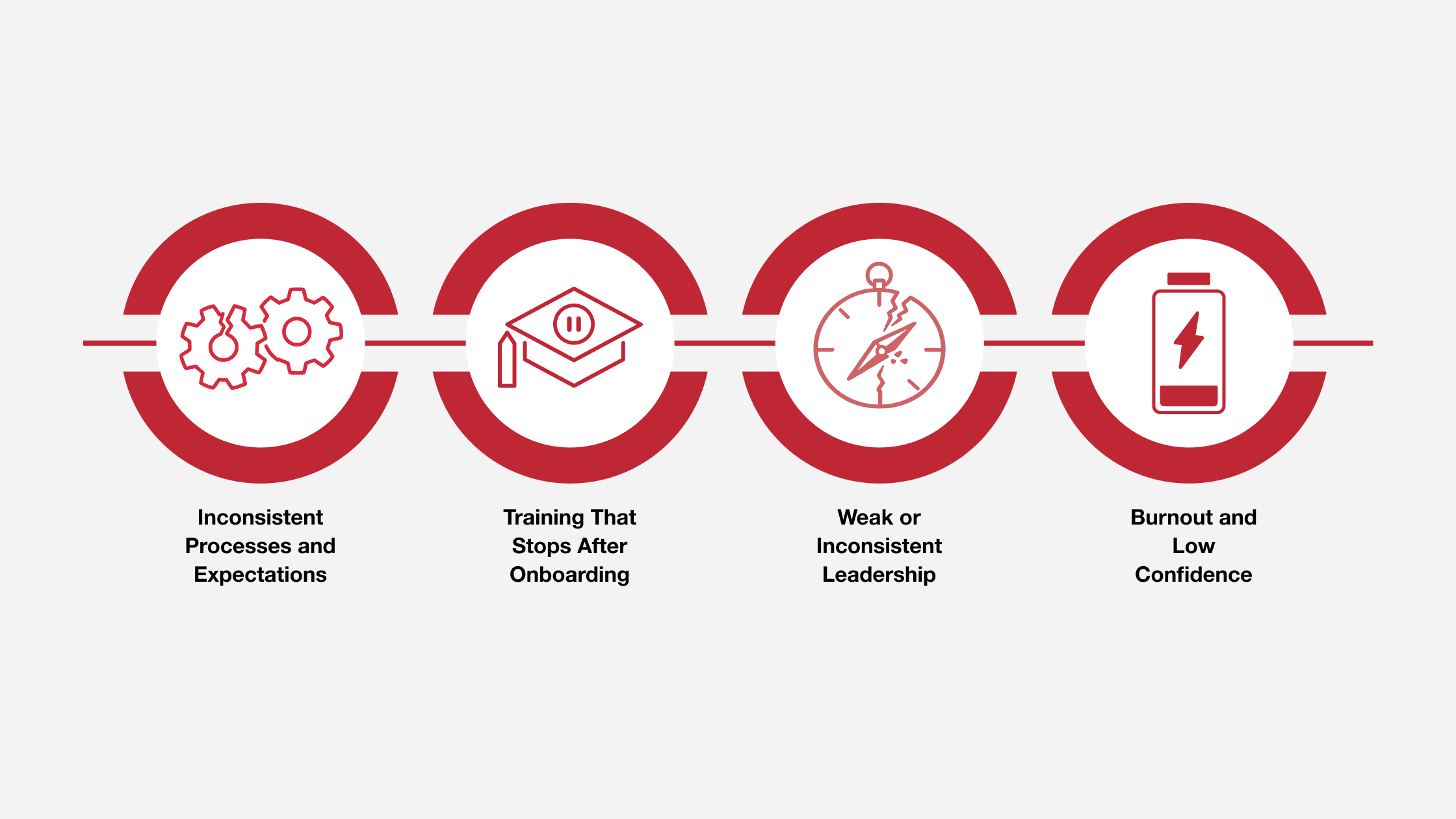
Sales teams do not fail overnight. Performance erodes gradually as minor issues compound. Understanding why teams struggle is the first step toward correcting the problem.
Inconsistent Processes and Expectations
When salespeople operate without clear, reinforced standards, performance becomes inconsistent. Each person develops their own way of handling leads, greeting customers, following up, and closing deals. Managers coach based on personal preferences rather than shared benchmarks.
Without consistent processes:
- Lead handling varies by salesperson and shift
- Follow-up becomes irregular or incomplete
- Customer experience feels unpredictable
- Coaching becomes reactive instead of structured
Over time, inconsistency makes results unreliable and difficult to manage.
Training That Stops After Onboarding
Most dealerships train aggressively during onboarding, then move on. New hires receive information quickly, but reinforcement disappears once they hit the floor. As daily pressure increases, skills fade and shortcuts replace best practices.
Without continuous training:
- Product knowledge becomes outdated
- Discovery skills weaken
- Salespeople rely on price-first selling
- CRM usage declines
The result is a team that works hard but executes poorly.
Weak or Inconsistent Leadership
Sales managers play a critical role in daily performance. When leadership lacks structure, coaching becomes sporadic. Feedback happens only when numbers drop or when the month-end approaches.
Common leadership gaps include:
- Limited observation of live sales activity
- Vague feedback instead of a specific correction
- Inconsistent enforcement of standards
- Coaching based on results, not behavior
When leadership lacks consistency, sales teams struggle to self-correct.
Burnout and Low Confidence
Sales environments move fast. Without support, pressure accumulates. Salespeople lose confidence when their efforts do not translate into results. Missed opportunities feel personal, and motivation declines.
Burnout often shows up as:
- Missed follow-up
- Reduced engagement with leads
- Resistance to coaching
- Increased turnover
Burned-out teams cannot recover without rebuilding confidence and clarity.
How to Support an Underperforming Dealership Sales Team
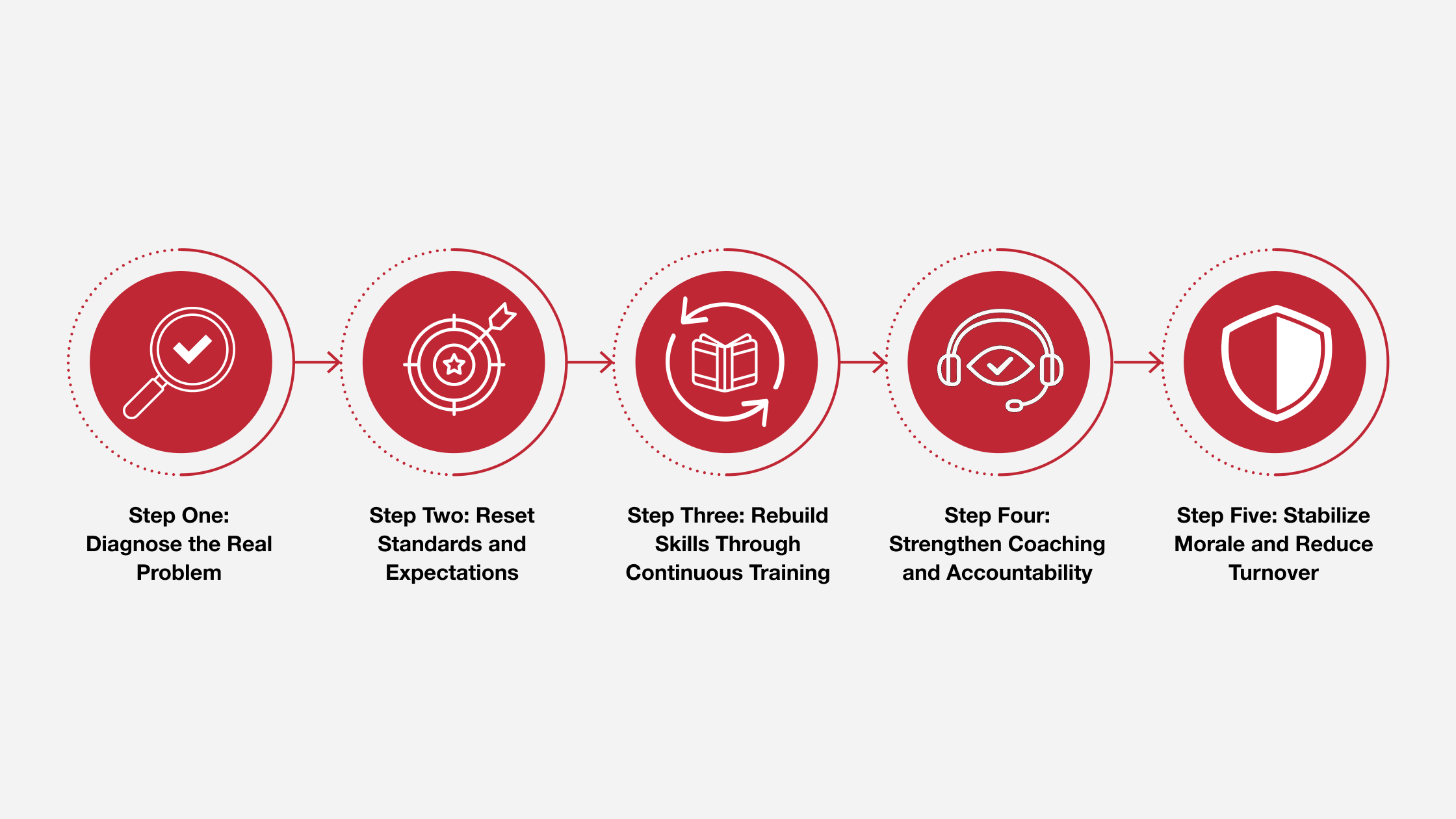
Here’s how to deal with a struggling dealership sales team.
Step One: Diagnose the Real Problem
Struggling sales teams rarely suffer from a single issue. Performance declines when small breakdowns go unnoticed and uncorrected. Accurate diagnosis requires objective data and direct observation. Identifying whether problems stem from process gaps or leadership inconsistency allows dealerships to fix causes instead of symptoms.
Review Key Performance Indicators
Before assuming motivation or market conditions are the problem, dealerships must look at measurable behavior. Key performance indicators reveal how the team operates day to day. Metrics tied to response, follow-up, and conversion highlight where execution slips, allowing leaders to address specific breakdowns rather than guess at causes.
Important indicators include:
- Lead response time
- Appointment set and show rates
- Closing ratios
- Follow-up consistency
- CRM activity levels
Patterns in these numbers reveal where execution is breaking down.
Observe the Sales Process in Real Time
Spend time on the floor. Listen to calls. Watch customer interactions. Review follow-up messages. Struggling teams often repeat the same mistakes.
Look for:
- Poor discovery conversations
- Feature dumping without personalization
- Rushed presentations
- Inconsistent greetings and handoffs
Direct observation provides insight that reports cannot.
Separate Skill Gaps from Effort Gaps
Low performance does not always signal low effort. Many salespeople work hard without the skills or clarity needed to improve results. Separating skill gaps from effort gaps prevents misdiagnosis. When expectations are unclear or coaching is inconsistent, even motivated teams struggle to translate activity into outcomes.
Ask:
- Do they know what good performance looks like?
- Have expectations been clearly defined?
- Are they receiving regular coaching?
When effort is high, but results are low, training and structure are missing.
Step Two: Reset Standards and Expectations
Once gaps are identified, expectations must be reset with clarity and consistency. Sales teams cannot improve when standards shift or remain unclear. Establishing non-negotiable behaviors and aligning leadership around them creates stability, reduces confusion, and gives salespeople a clear framework for daily execution and accountability.
Define Non-Negotiable Sales Behaviors
Identify the core behaviors every salesperson must follow, regardless of experience or style. These should include:
- Lead response standards
- Follow-up frequency and structure
- Discovery questions
- Presentation flow
- CRM usage expectations
Document these standards and reinforce them daily.
Align Managers Around the Same Standards
Sales teams lose confidence when managers enforce different rules or coach from personal preference. Alignment ensures leadership delivers one message, one standard, and one expectation. When managers operate from the same framework, coaching becomes clearer, accountability strengthens, and execution stabilizes across shifts and departments.
Hold leadership alignment sessions to ensure:
- Coaching language is consistent
- Feedback focuses on behavior, not personality
- Expectations are enforced equally
Alignment at the top stabilizes the entire team.
Communicate Expectations Clearly and Often
Clear standards lose impact if they are communicated once and forgotten. Struggling teams need frequent reinforcement to stay aligned under pressure. Repetition through meetings, coaching, and performance reviews keeps expectations visible, reduces uncertainty, and helps salespeople focus on controllable behaviors that drive consistent results.
Reinforce standards through:
- Daily sales meetings
- One-on-one coaching sessions
- Call reviews
- Performance dashboards
Clarity reduces anxiety and restores focus.
Step Three: Rebuild Skills Through Continuous Training
Continuous training restores consistency by reinforcing skills where performance actually happens: on the floor, on calls, and in follow-up. It prevents skill degradation, replaces shortcuts with structure, and keeps teams aligned as inventory, buyer behavior, and daily pressure change. Training becomes part of operations, not an interruption.
Focus Training on Real Daily Activities
Effective training connects directly to what salespeople do every day. Avoid abstract theory.
Prioritize:
- Live role-play based on current inventory
- Call reviews from actual leads
- Walk-arounds tied to customer needs
- Follow-up message practice
When training feels relevant, adoption improves.
Train in Short, Frequent Sessions
Long sessions overwhelm teams and disrupt operations. Short, focused training sessions work better. Effective cadence includes:
- Weekly skill refreshers
- Daily micro-coaching moments
- Monthly performance reviews
Frequent reinforcement turns learning into a habit.
Reinforce Confidence, Not Just Technique
Skill development alone is not enough when confidence has eroded. Salespeople perform best when they trust their process and their ability to execute it. Training should reinforce progress, highlight improvement, and clarify expectations so confidence rebuilds alongside technique, creating momentum instead of hesitation.
Confidence grows when:
- Expectations are clear
- Feedback is specific
- Improvement is visible
As confidence returns, performance follows.
Step Four: Strengthen Coaching and Accountability
Coaching transforms training into execution. Without consistent coaching, even strong training fades under pressure. Structured accountability ensures expectations stay clear, behaviors stay aligned, and corrections happen early. When managers coach daily with purpose, struggling teams regain direction, confidence, and control over results.
Coach Behaviors Before Results
Results reflect past behavior. Coaching focused only on outcomes arrives too late to correct performance. Effective managers observe daily activity, address behaviors in real time, and guide adjustments early. This approach prevents small mistakes from compounding and gives salespeople practical direction they can apply immediately.
Effective coaching includes:
- Observing live interactions
- Reviewing calls and follow-up
- Providing immediate feedback
Correcting behavior early prevents larger losses later.
Create a Predictable Coaching Rhythm
Inconsistent coaching creates uncertainty and weakens accountability. A predictable rhythm gives salespeople confidence that feedback is ongoing, not reactive. When coaching happens on a routine schedule, expectations stay clear, progress becomes measurable, and improvement feels supported rather than punitive.
Examples include:
- Daily floor observation
- Weekly one-on-ones
- Monthly performance planning
Predictability builds trust and accountability.
Hold Everyone to the Same Standard
Selective enforcement undermines trust and culture. When standards apply only to certain team members, resentment grows and processes erode. Holding everyone accountable to the same expectations protects consistency, supports new hires, and reinforces that performance standards matter more than tenure or past success.
When standards apply to everyone:
- Processes stay intact
- New hires integrate faster
- Resentment decreases
Fair accountability strengthens teams.
Step Five: Stabilize Morale and Reduce Turnover
Struggling teams often lose people before they regain performance. Stabilizing morale protects improvement efforts. Salespeople stay engaged when leadership replaces blame with clarity, support, and visible progress. Confidence rebuilds when teams see a future built on structure, skill development, and consistent expectations.
Acknowledge the Challenge Without Blame
Blame accelerates burnout and resistance. Acknowledging challenges honestly while removing personal fault creates psychological safety. When leaders focus on improvement instead of punishment, salespeople engage more openly with coaching, accept feedback faster, and regain confidence in the dealership’s commitment to their success.
Instead:
- Acknowledge challenges openly
- Emphasize improvement over punishment
- Reinforce support and development
Psychological safety improves engagement.
Show a Clear Path Forward
Uncertainty fuels disengagement and turnover. Salespeople stay committed when they see how improvement will happen and what success looks like. Clear expectations, visible coaching, and structured development show teams that progress is achievable, restoring focus and trust during recovery periods.
Demonstrate:
- Clear expectations
- Regular coaching
- Skill development opportunities
Momentum keeps people invested.
Track and Share Small Wins
Recovery happens incrementally, not overnight. Tracking and sharing small improvements keeps momentum alive. Recognizing progress reinforces positive behavior, builds confidence, and reminds teams that effort is producing results. Visible wins help struggling sales teams stay engaged long enough for larger gains to follow.
Celebrate:
- Faster lead responses
- Better appointment show rates
- Improved follow-up consistency
Visible wins rebuild belief.
What Effective Recovery Looks Like
Effective recovery follows a clear pattern, not guesswork. When dealerships diagnose accurately, reset standards, reinforce skills, and coach consistently, performance stabilizes. The process replaces pressure with structure, restores confidence, and creates sustainable improvement that holds even as volume, staffing, and market conditions change.
Recovery is not instant, but it is reliable when structure replaces pressure.
Common Mistakes Dealerships Make
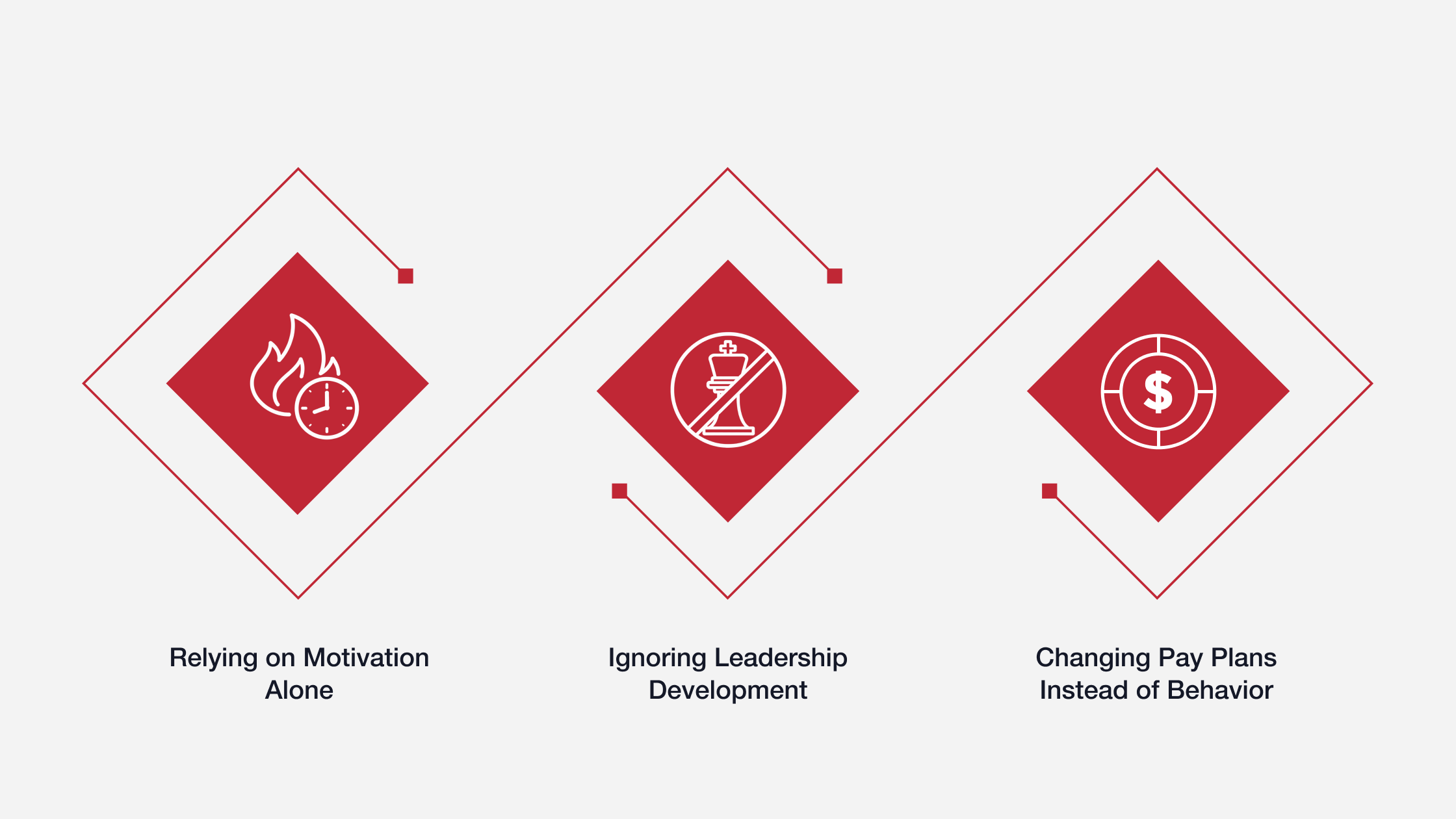
Even with good intentions, dealerships often repeat the same errors.
1. Relying on Motivation Alone
Motivation fades quickly without structure, leaving teams energized briefly but unable to execute consistently.
2. Ignoring Leadership Development
Untrained managers struggle to coach effectively, causing inconsistency, confusion, and stalled performance across teams.
3. Changing Pay Plans Instead of Behavior
Compensation changes rarely fix execution gaps when core sales behaviors remain unclear or unsupported.
Avoiding these mistakes shortens recovery time.
Rebuild Sales Performance Through Daily Execution With ATN’s Proven Guidance

Struggling sales teams do not need more pressure. They need structure, clarity, and consistent support.
Automotive Training Network delivers continuous, in-dealership training designed to stabilize struggling teams and restore consistent performance. With over four decades of automotive experience and more than 12,000 dealerships trained, ATN focuses on daily execution, leadership coaching, and behavior-based improvement.
ATN helps dealerships:
- Identify execution gaps quickly
- Reinforce sales standards daily
- Develop confident, effective managers
- Improve lead conversion and follow-up
- Reduce turnover through ongoing support
Sustainable recovery comes from consistent execution, not short-term fixes. Rebuild your sales team, restore confidence, and create predictable growth.