Cross-Department Training: How Service, Sales, and BDC Can Learn Together
Collaboration drives real value for employees and organizations in today’s workplace. According to recent research, 92% of workers in collaborative teams report seeing more value in their work than those in less collaborative environments. That kind of engagement matters deeply in industries like automotive retail, where customer experience and seamless internal coordination are critical.
Dealerships are complex ecosystems. Sales teams work hand in hand with Business Development Centers (BDCs) and Service departments, yet these groups often operate in silos. Without shared understanding and aligned processes, customers can receive mixed messages, internal friction increases, and achieving performance gains becomes harder.
Cross-department training breaks down those barriers by bringing teams together to learn shared goals, processes, and expectations. When Service, Sales, and BDC teams train together, they gain mutual insight into workflows, build stronger communication habits, and support a more consistent customer experience, all of which strengthen daily operations and overall dealership performance.
What Is Cross-Department Training?
Cross-department training brings teams together to learn how their roles connect across the full customer journey. Instead of training Sales, Service, and BDC in isolation, this approach focuses on shared workflows, handoffs, and expectations that shape the customer experience end to end.
In a dealership setting, that means learning how a lead moves from the BDC to Sales, how Service interactions influence future purchases, and how communication between departments affects trust and follow-up. Training sessions are built around real scenarios teams encounter every day, not abstract role descriptions.
The goal is to create a shared understanding of how each department supports the others. When teams learn together, they develop a common language, clearer expectations, and smoother coordination, making daily operations more efficient and customer interactions more consistent.
Why Dealership Teams Perform Better When They Train Together
Dealership teams interact with the same customers, just at different moments. When Sales, Service, and BDC train separately, gaps naturally form in how information is shared and how expectations are set. Training together helps close those gaps by building empathy and alignment across roles.
When teams learn side by side, they gain a clearer understanding of each other’s responsibilities and pressures. BDC teams better understand Service scheduling realities. Sales teams see how Service experiences influence repeat business. Service advisors understand how early conversations shape customer expectations. That shared perspective improves communication and reduces friction in day-to-day operations.
Training together also creates a common language around the customer journey. Teams align on how conversations should sound, how handoffs should work, and what customers should experience at every touchpoint. With shared expectations in place, collaboration becomes smoother, and customers receive consistent, confident communication throughout their relationship with the dealership.
Five Benefits of Cross-Department Training
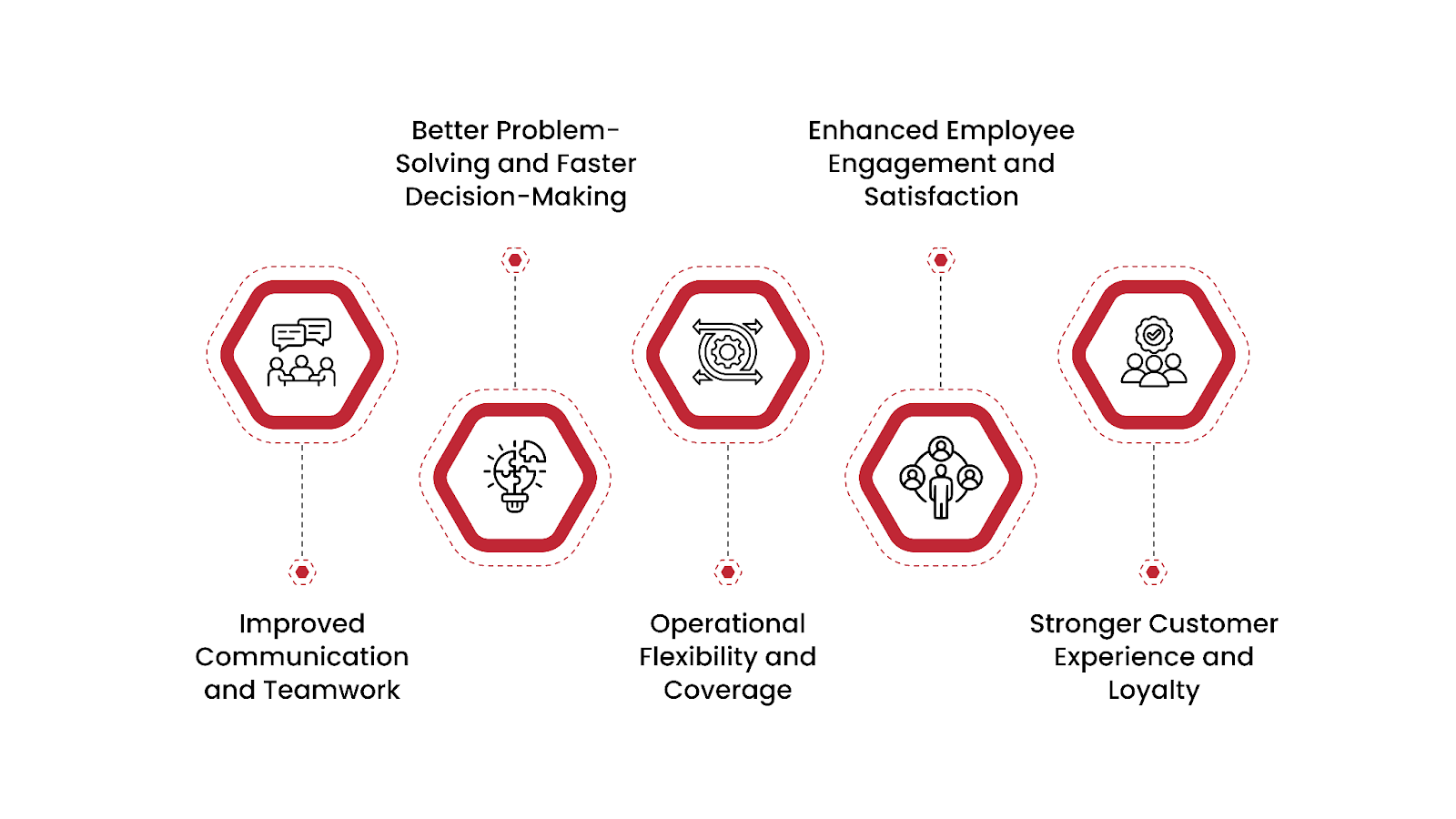
When dealership teams learn together, collaboration becomes intentional rather than accidental. Cross-department training strengthens how Sales, Service, and BDC teams communicate, coordinate, and support the customer journey.
The benefits below highlight why bringing departments into the same learning environment leads to smoother operations and a more consistent experience for customers.
1. Improved Communication and Teamwork
Cross-department training creates a shared understanding of how each team operates. When Sales, Service, and BDC learn together, communication becomes clearer and collaboration improves across daily interactions.
This benefit shows up through:
- Shared terminology: Teams understand each other’s language, reducing confusion during handoffs.
- Aligned priorities: Departments recognize what matters most to one another during busy periods.
- Smoother coordination: Information flows more easily between teams without repeated clarification.
- Stronger collaboration: Teams work together instead of around each other.
After joint training, BDC team members understand Service scheduling limitations and advisor availability. Appointment setting becomes more accurate, reducing reschedules and improving the customer experience for everyone involved.
2. Better Problem-Solving and Faster Decision-Making
Cross-department training helps teams resolve issues faster by bringing multiple perspectives into the same conversation. When Sales, Service, and BDC understand how their decisions affect one another, problems get solved at the source rather than passed along.
This activity builds shared accountability, speeds up decisions, and reinforces a habit of solving problems together rather than in silos.
3. Operational Flexibility and Coverage
Cross-department training gives dealerships greater flexibility during busy periods, staffing gaps, or unexpected surges in customer activity. When teams understand each other’s workflows, they can support one another without disrupting service quality.
Instead of work piling up in one area, responsibilities can be shared smoothly and confidently.
This flexibility shows up through:
- Broader role awareness: Team members understand basic responsibilities outside their primary department.
- Faster response during peak times: Support steps in when one department is overloaded.
- Reduced bottlenecks: Work keeps moving even when staffing is tight.
- More confident handoffs: Customers experience continuity rather than delays.
Example:During a busy service morning, a cross-trained Sales team member helps with customer check-ins or status updates. Service advisors stay focused on repairs, customers feel supported, and operations stay on track without added stress.
4. Enhanced Employee Engagement and Satisfaction
Cross-department training keeps work interesting and meaningful by helping employees see how their role fits into the bigger picture. When teams understand how their efforts support others, engagement increases and daily work feels more purposeful.
Learning alongside colleagues from other departments also creates a sense of inclusion and professional growth.
This benefit shows up through:
- Broader skill development: Employees gain new knowledge that supports confidence and growth.
- Stronger sense of purpose: Teams understand how their work impacts customer outcomes.
- Reduced monotony: Exposure to different roles keeps learning fresh and engaging.
- Improved morale: Employees feel invested in rather than siloed.
When people feel connected to the dealership’s success beyond their own department, satisfaction improves, and teams become more motivated to contribute consistently.
This activity builds empathy, encourages mutual respect, and helps employees feel more connected to one another, key drivers of engagement and satisfaction.
5. Stronger Customer Experience and Loyalty
Customers don’t see departments. They see one dealership. Cross-department training helps ensure that every interaction feels connected, consistent, and intentional, no matter who the customer speaks with or when.
When Service, Sales, and BDC teams train together, they align on how conversations should sound, how expectations are set, and how follow-ups are handled. That alignment removes friction and builds trust over time.
This benefit shows up through:
- Consistent messaging: Customers receive the same information and tone across departments.
- Smoother handoffs: Transitions between BDC, Sales, and Service feel seamless rather than repetitive.
- Fewer misunderstandings: Clear internal communication prevents mixed signals.
- Stronger follow-through: Customers feel remembered and supported beyond a single visit.
- Greater confidence: A unified team creates a more professional and reassuring experience.
Example:A customer schedules service through the BDC, discusses vehicle options with Sales during their visit, and later follows up with Service. Because teams trained together, each interaction builds on the last, leaving the customer feeling known, valued, and more likely to return.
Creative Training Formats That Bring Departments Together
Cross-department training works best when learning is interactive and rooted in real dealership activity. Creative formats help teams engage with one another, practice collaboration, and gain insight into how their roles intersect throughout the customer journey.
Effective cross-training methods include:
- Joint role-playing scenarios: Sales, BDC, and Service teams act out real customer situations together, practicing handoffs, communication, and problem resolution in a shared setting.
- Shadow days: Team members spend part of a shift observing another department’s workflow, gaining a firsthand understanding of daily responsibilities and challenges.
- Case studies and problem-solving workshops: Cross-functional groups work through real operational issues, identifying solutions that benefit the dealership as a whole.
These activities do more than transfer knowledge. They build respect between departments, strengthen communication, and develop practical skills that translate directly into smoother collaboration and a more consistent customer experience.
How to Start a Cross-Department Training Program
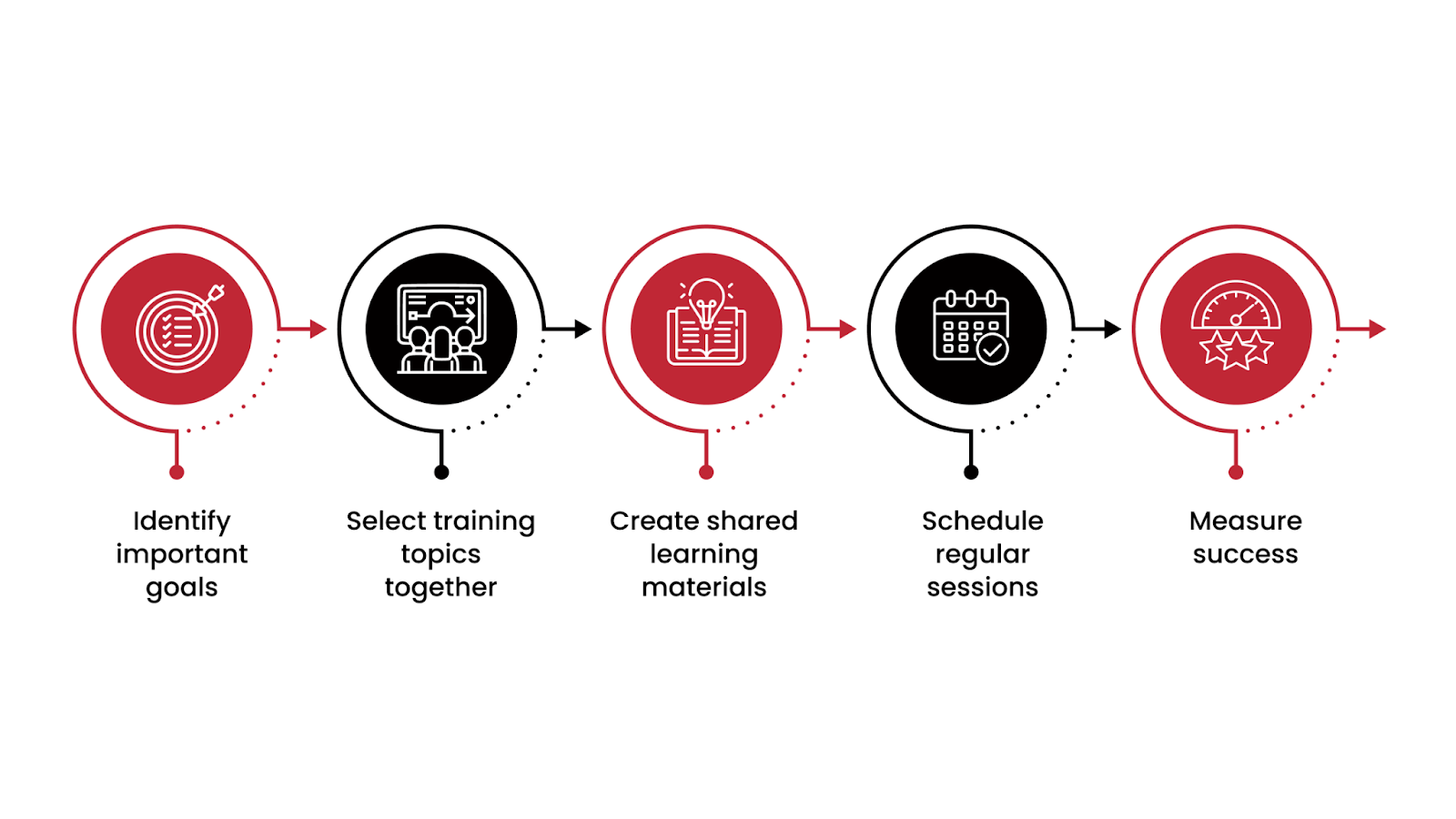
Launching a cross-department training program starts with clear intent, shared ownership, and consistent follow-through. These practical steps help dealerships build a program that delivers real results.
- Identify important goals: Define what success looks like. Common goals include improving customer satisfaction, reducing handoff errors, and strengthening follow-up consistency.
- Select training topics together: Involve leaders from Sales, Service, and BDC to prioritize areas where teams interact most, such as lead handoffs, appointment scheduling, and service follow-up.
- Create shared learning materials: Develop content based on real dealership scenarios, using language and examples that resonate across departments.
- Schedule regular sessions: Treat cross-department training as an ongoing practice rather than a one-time initiative. Short, recurring sessions maintain momentum and alignment.
- Measure success: Track outcomes such as scheduling accuracy, cross-sell opportunities, and customer satisfaction to understand what’s working and refine the approach.
By starting with collaboration and consistency, dealerships can build a training program that strengthens teamwork, improves communication, and supports a more unified customer experience.
Unite Your Teams With Cross-Department Training From Automotive Training Network
When Service, Sales, and BDC teams learn together, dealerships operate with greater clarity and confidence. Automotive Training Network helps bring departments into alignment through cross-department training that reflects real dealership workflows and customer interactions.
ATN’s customer-first training approach focuses on building shared understanding, clear communication, and consistent execution across teams. By working directly inside the dealership, ATN reinforces habits that support smoother handoffs, stronger collaboration, and a more connected customer experience.
Dealerships that partner with Automotive Training Network benefit from:
- Cross-department training programs: Sessions that bring Service, Sales, and BDC together around shared goals.
- In-dealership and virtual delivery options: Flexible formats that fit daily operations.
- Real-world scenarios and coaching: Training built around actual customer interactions and workflows.
- Improved alignment and accountability: Clear expectations that support teamwork and performance.
- Decades of dealership experience: Trusted guidance shaped by working with thousands of teams worldwide.
If your dealership is ready to break down silos and create a more unified customer experience, Automotive Training Network is ready to help. Start building stronger collaboration across every department.