How to Write BDC Scripts That Book More Appointments
Most dealership leads start online but quickly move to a phone call with your BDC team. That call is where interest either turns into an appointment or disappears.
Phone interactions have become one of the most critical moments in the buying journey. Yet many opportunities are lost at this stage. An analysis of roughly 750,000 dealership sales calls found that about 20% went unanswered. Of the calls that were connected, 40% were not logged in a CRM, and another 40% ended without a clear next step.
That means a significant number of high-intent opportunities are lost, not due to lack of interest, but due to how the conversation is handled.
This is where most dealerships fall short. BDC agents answer questions but fail to guide the customer toward a visit. Without structure, conversations stall and opportunities slip away.
Effective BDC scripts change that. They give direction, build trust, and move every call toward a clear outcome. In this blog, we will understand why most scripts fail, what makes them convert, and how your team can consistently turn calls into showroom appointments.
Why Your BDC Scripts Aren’t Converting Calls Into Appointments
Most dealerships already have scripts in place. The issue is not the absence of scripts; it is how they are built and used. Many BDC scripts fail to convert because they focus on information instead of action. Instead of guiding the customer toward an appointment, they turn into long conversations that never move forward.
Common reasons BDC appointment scripts fall short include:
- No clear objective: Scripts often lack a defined goal, leaving agents focused on answering questions instead of securing an appointment.
- Overloaded with information: Too many details about pricing, features, or inventory overwhelm the customer and stall the conversation.
- Robotic delivery: Scripts that sound scripted reduce trust and make the interaction feel impersonal.
- Weak appointment ask: Agents hesitate or phrase the ask passively, making it easy for customers to avoid committing.
- Lack of adaptability: Scripts do not account for different customer responses, leading to awkward or disconnected conversations.
- No value in visiting: Customers have no compelling reason to come to the dealership.
- Insufficient training: Teams are handed scripts but not trained on tone, timing, or execution.
When scripts are treated as rigid lines rather than structured conversation guides, they lose effectiveness. High-performing BDC teams use scripts differently. They use them as a framework to control the flow of the conversation while keeping it natural and focused on booking the appointment.
What Makes a High-Converting BDC Appointment Script
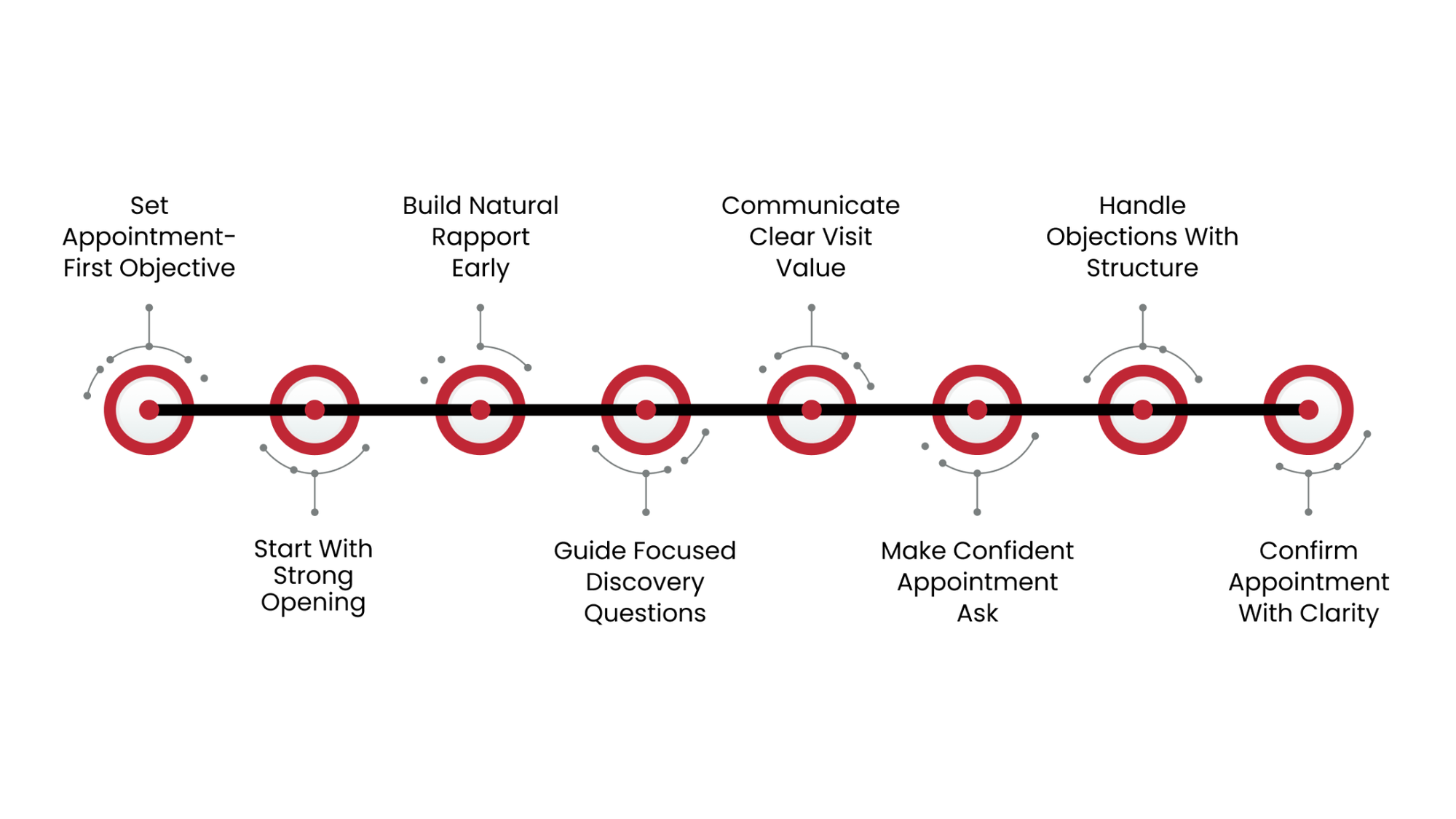
A high-performing BDC script guides the conversation with purpose. The most effective scripts give agents structure while allowing flexibility, helping them move every call toward a clear outcome without sounding forced or robotic.
Set Appointment-First Objective
Every high-converting script is built around a single outcome: setting the appointment. Without this clarity, conversations drift into answering questions or providing information without moving forward. Strong scripts keep the agent focused on guiding the customer toward a visit, ensuring every part of the conversation supports that goal.
Start With Strong Opening
The first few seconds of the call set the tone for everything that follows. A clear, professional introduction helps establish credibility and puts the customer at ease. Strong openings also prevent the conversation from becoming reactive, allowing the agent to lead rather than follow.
Build Natural Rapport Early
Customers respond better when conversations feel genuine rather than transactional. High-converting scripts include simple ways to create a connection early, helping customers feel comfortable and more open to continuing the conversation. This step builds trust without slowing down momentum.
Guide Focused Discovery Questions
Effective scripts include a small number of focused questions that help understand the customer’s needs. The goal is not to interrogate, but to guide. These questions provide context while keeping the conversation efficient and aligned with the objective of setting the appointment.
Communicate Clear Visit Value
Customers rarely commit to an appointment without a reason. High-converting scripts clearly communicate why coming into the dealership benefits them. This may include confirming availability, saving time, or improving the in-person experience. The focus is always on customer value, not dealership convenience.
Make Confident Appointment Ask
One of the biggest differences between average and high-performing BDC teams is how they request appointments. Strong scripts include a clear, confident ask that guides the customer toward a specific time. This removes ambiguity and makes it easier for the customer to say yes.
Handle Objections With Structure
Objections are a natural part of the conversation. High-converting scripts prepare agents to handle them without losing direction. Instead of reacting defensively, agents acknowledge concerns and smoothly guide the conversation back toward the appointment.
Confirm Appointment With Clarity
Setting the appointment is only part of the process. High-performing scripts include a structured confirmation that reinforces the time, date, and next steps. This ensures the customer feels committed and reduces the likelihood of no-shows.
When these elements are built into a script, conversations become more focused, more confident, and significantly more effective at converting calls into showroom appointments.
Proven BDC Appointment Setting Scripts for Dealerships
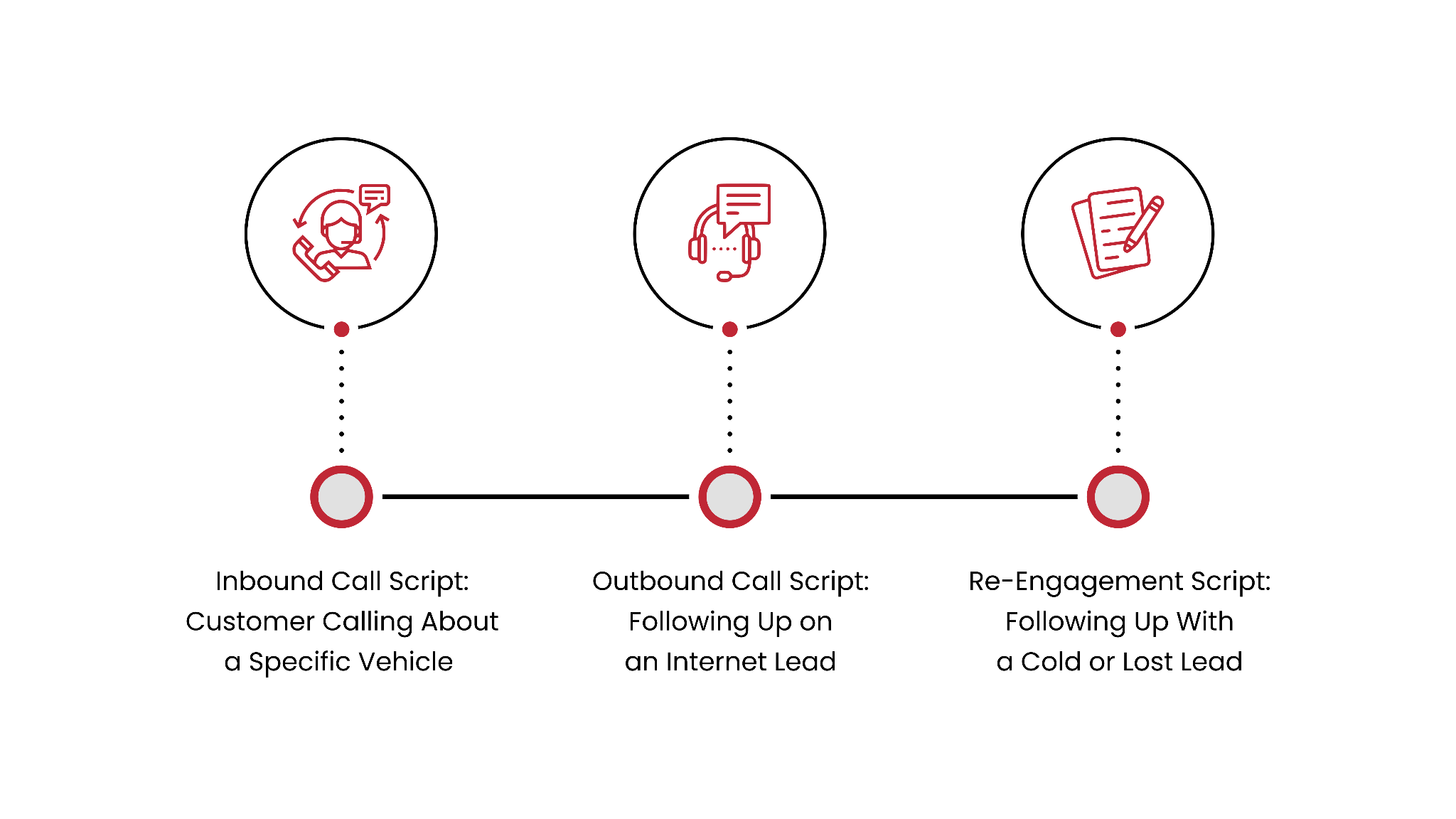
The most effective BDC scripts are not meant to be memorized word-for-word. They are frameworks that guide the flow of the conversation while allowing agents to sound natural and confident. When used correctly, these scripts provide structure without making the interaction feel forced, helping agents stay focused on the ultimate goal: booking the appointment.
Below are practical script frameworks that BDC teams can adapt to customer responses, tone, and the situation at hand.
Inbound Call Script: Customer Calling About a Specific Vehicle
Outbound Call Script: Following Up on an Internet Lead
Re-Engagement Script: Following Up With a Cold or Lost Lead
These scripts work because they keep the conversation focused, natural, and action-oriented. Instead of trying to close over the phone, they guide the customer toward the next step: getting them into the dealership, where the real opportunity to sell begins.
Handling Common BDC Objections That Block Appointments
Objections are a normal part of every BDC conversation. The difference between average and high-performing teams is not whether objections occur, but how they are handled. Effective responses acknowledge the customer’s concern while keeping the conversation moving toward the appointment instead of allowing it to stall.
Common objections and how to handle them include:
- “I’m just looking:” Acknowledge their stage and guide gently. “That makes sense. The easiest way to compare options is to see them in person. Would later today or tomorrow work better for you?”
- “What’s your best price?” Avoid turning the call into a negotiation. “I can definitely go over pricing with you, and the best way to get accurate numbers is when you’re here. Let’s set a quick time so we can review everything properly.”
- “I’ll come in later.” Replace vague intent with a commitment. “That sounds good. Let’s lock in a time that works for you so we can have everything ready when you arrive.”
- “I need to think about it:” Keep engagement without pressure. “Of course. Most customers find it helpful to see the vehicle in person before deciding. We can set a quick visit so you have all the information you need.”
- “Just send me the details.” Prevent the conversation from ending digitally. “I’ll send you the details, and it will make more sense when you see it in person. Let’s schedule a quick time so we can go over everything together.”
- “I’m shopping other dealerships:” Position value instead of competing. “That’s a smart approach. Visiting will help you compare properly, and I’ll make sure you have everything you need to make the right decision.”
Handling objections effectively keeps the conversation productive and ensures that hesitation does not turn into a lost opportunity.
Training BDC Teams to Use Scripts Naturally
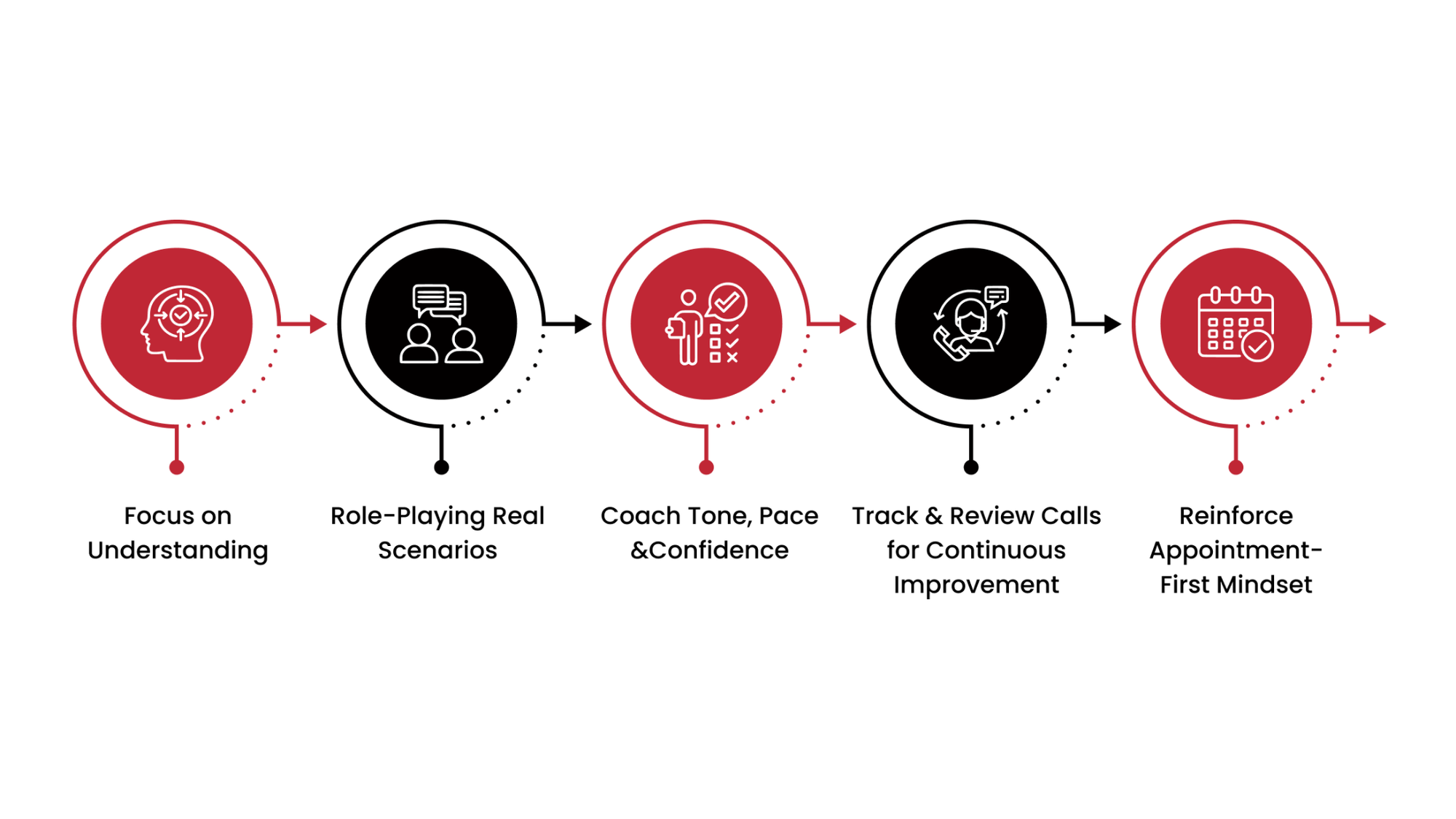
Even the best scripts fail without proper training. The goal is not to have agents recite lines, but to help them communicate with confidence and consistency. When in-dealership training focuses on understanding, delivery, and repetition, scripts become a natural part of the conversation rather than something agents rely on mechanically.
Focus on Understanding
Scripts should act as a framework, not a fixed set of lines. When agents understand the purpose behind each part of the conversation, they can adapt naturally while staying on track.
- Structure over wording: Agents learn the conversational flow rather than memorize exact phrases.
- Intent-driven communication: Each step has a purpose, guiding the customer toward the appointment.
- Flexibility in delivery: Agents can adjust wording while maintaining consistency in approach.
When agents understand the “why” behind the script, conversations become more natural and effective.
Role-Playing Real Scenarios
Practice is essential for building confidence. Role-playing allows agents to experience real situations in a controlled environment before handling actual customers.
- Simulated conversations: Practice inbound, outbound, and objection scenarios.
- Repetition builds confidence: The more agents practice, the more comfortable they become.
- Immediate feedback: Trainers can correct mistakes and reinforce strong approaches.
Regular role-play sessions help agents handle real calls more easily and with greater control.
Coach Tone, Pace &Confidence
How something is said often matters more than what is said. Tone, pacing, and confidence directly influence how customers respond.
- Professional tone: Clear and friendly communication builds trust.
- Controlled pace: Avoid rushing or speaking too slowly to maintain engagement.
- Confident delivery: Strong delivery reinforces credibility and keeps the conversation moving.
Focusing on delivery ensures that scripts feel conversational rather than scripted.
Track & Review Calls for Continuous Improvement
Ongoing improvement comes from reviewing real conversations and identifying opportunities to refine performance.
- Call monitoring: Managers review recorded calls to assess performance.
- Identify patterns: Spot common mistakes or missed opportunities.
- Targeted coaching: Provide specific feedback based on actual conversations.
Consistent review helps agents refine their approach and improve results over time.
Reinforce Appointment-First Mindset
Every conversation should move toward one outcome: setting the appointment. Training should consistently reinforce this focus.
- Clear objective on every call: Agents stay focused on booking the visit.
- Guiding the conversation: Keep interactions structured and purposeful.
- Consistency across the team: Everyone follows the same approach, improving overall performance.
When appointment setting becomes the priority in every interaction, conversion rates improve, and more opportunities move into the showroom.
Turn More Calls Into Showroom Appointments With ATN
Strong BDC performance does not come from scripts alone. It comes from how those scripts are executed, how conversations are guided, and how consistently your team moves customers toward the appointment. Automotive Training Network helps dealerships build BDC teams that perform at a higher level through structured training focused on real conversations and measurable results.
Stuker’s BDC training equips your team with the skills needed to handle calls confidently, manage leads effectively, and increase appointment-setting performance. The program focuses on practical execution, helping agents improve their communication, objection handling, and customer guidance to drive action.
With ATN BDC training, your dealership can benefit from:
- Stronger phone skills: Improve how your team connects with customers and controls conversations
- Higher appointment conversion rates: Turn more inbound and outbound calls into confirmed visits
- Better objection handling: Equip agents to respond confidently without losing direction
- Improved lead management: Ensure every opportunity is tracked, followed up, and converted
- Consistent team performance: Create a repeatable process that delivers results across the entire BDC
A well-trained BDC becomes more than a support function. It becomes a reliable source of showroom traffic and dealership growth.
If you are ready to improve your team’s performance and book more appointments, explore ATN’s BDC training.
Frequently Asked Questions
1. What is the main goal of a BDC appointment script?
The primary goal is to guide the conversation toward booking a dealership visit. Every part of the script should help move the customer to the next step.
2. How long should a BDC appointment call typically last?
Most effective calls last between 3 and 5 minutes. The focus should be on efficiency and clarity rather than long conversations.
3. Should BDC agents follow scripts exactly as written?
No. Scripts should be used as a framework. Agents should understand the structure and adapt their wording to keep conversations natural.
4. How can dealerships improve appointment show rates?
Clear confirmation, setting expectations, and follow-up reminders via calls or texts help increase the likelihood that customers show up.
5. What is the most common mistake BDC agents make on calls?
Focusing too much on answering questions instead of guiding the customer toward setting an appointment.